Custom exhibit interactives
Exhibit Interactives
An exhibit is something you do.
Our goal is more activity and less static text. Whether it's a touchscreen, a flip door, a replica you can hold or a room you can climb into, we'd rather visitors learn by doing something than by reading about it.
These are the six kinds of interactivity we build most, named for what the visitor does. Each one comes with a plain note on what it takes to keep running, because the best interactive is the one still working in year five.
Every example is from one of our own projects. Most link to the full story of that exhibit on our work pages.
Screens
Tap
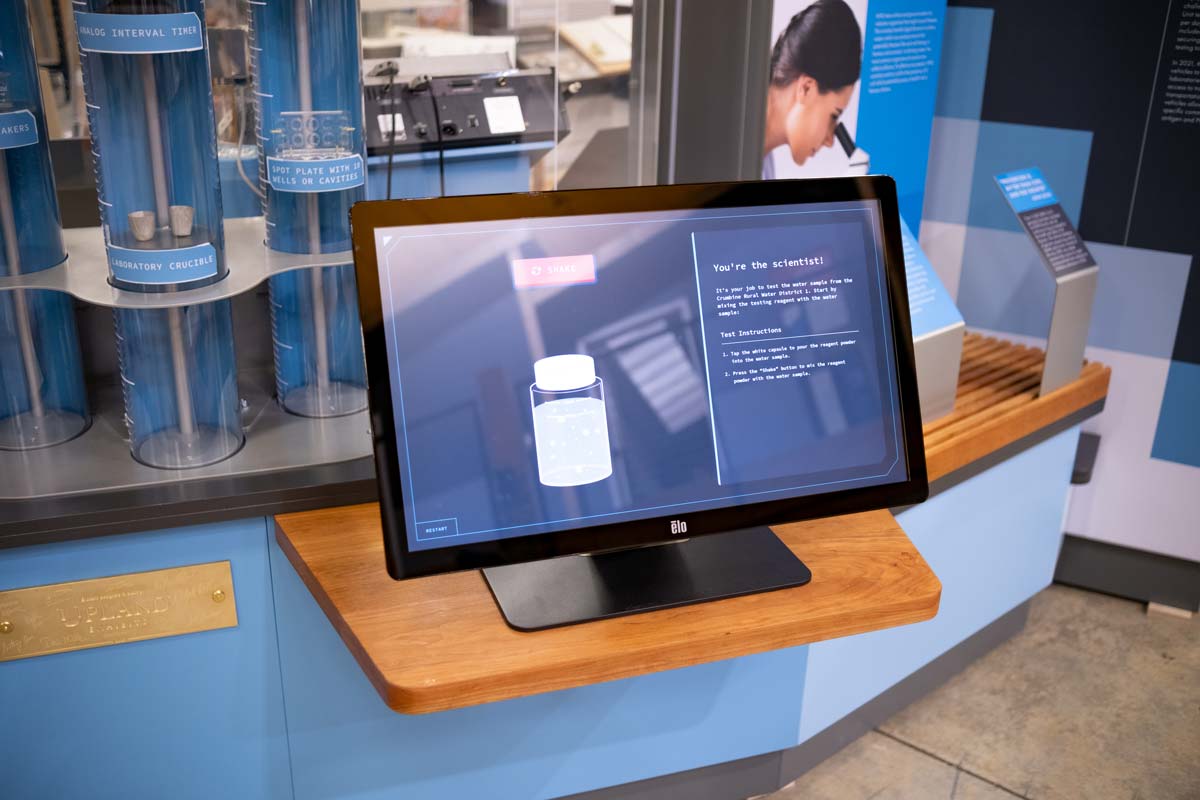
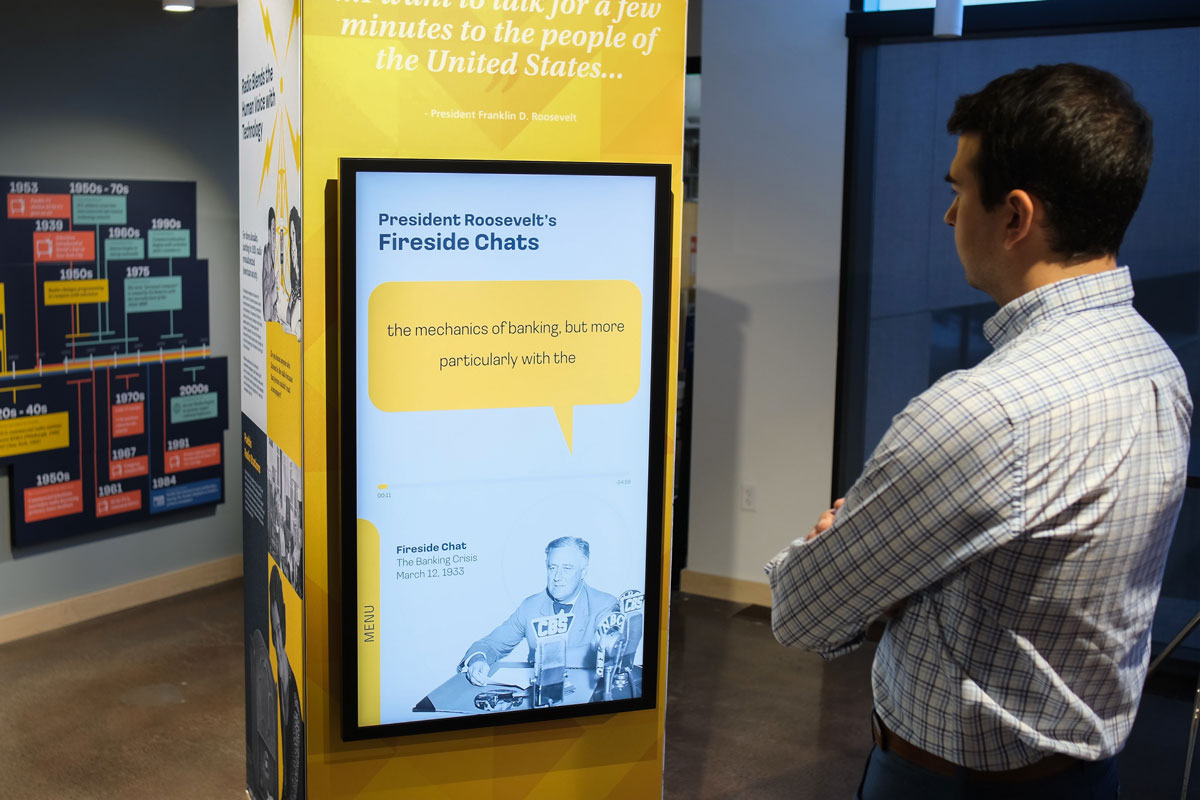
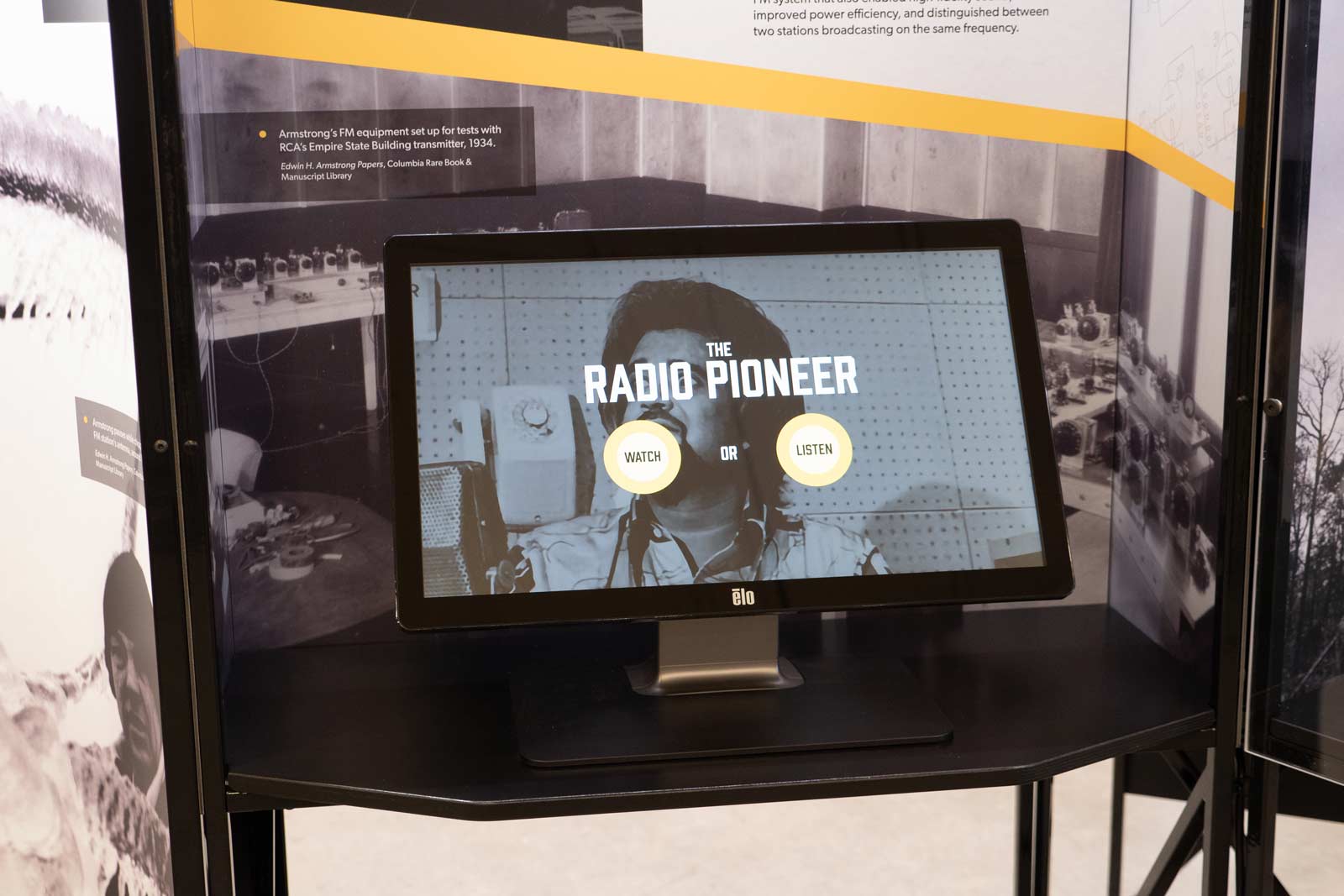
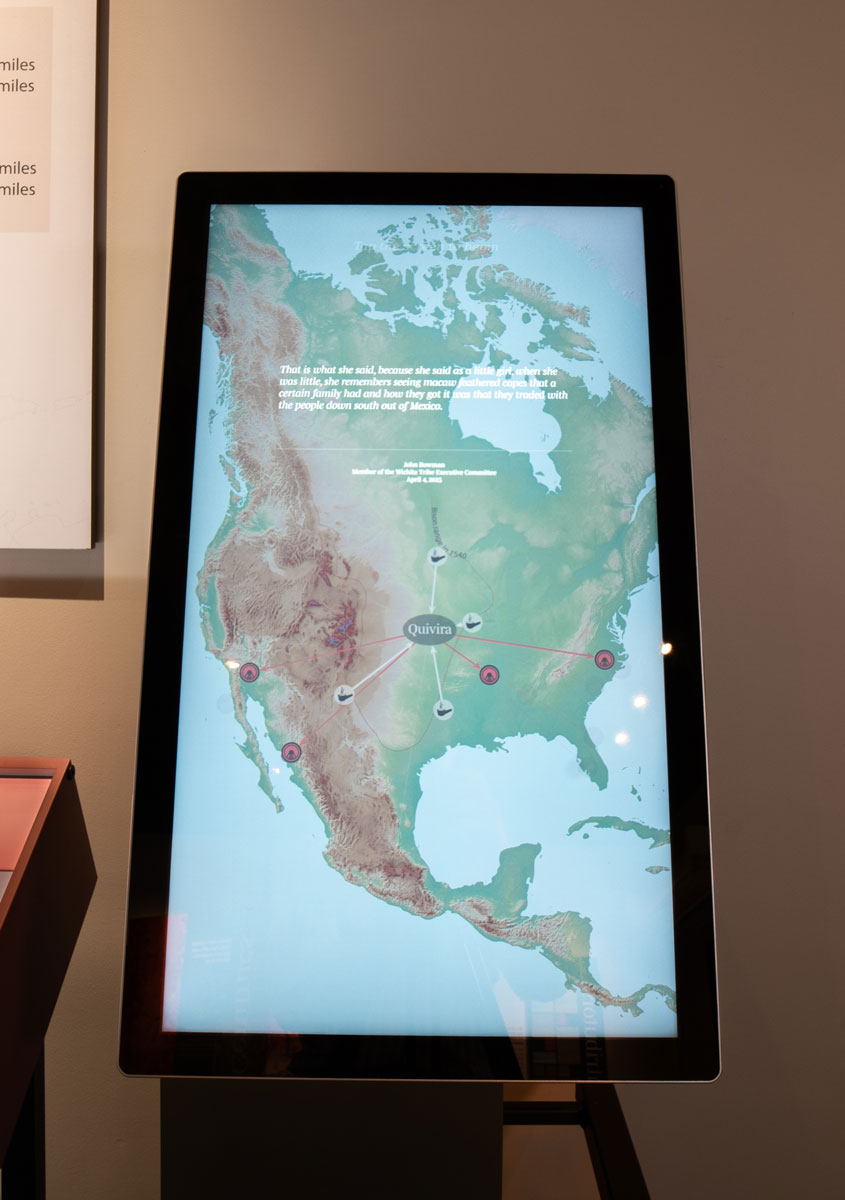
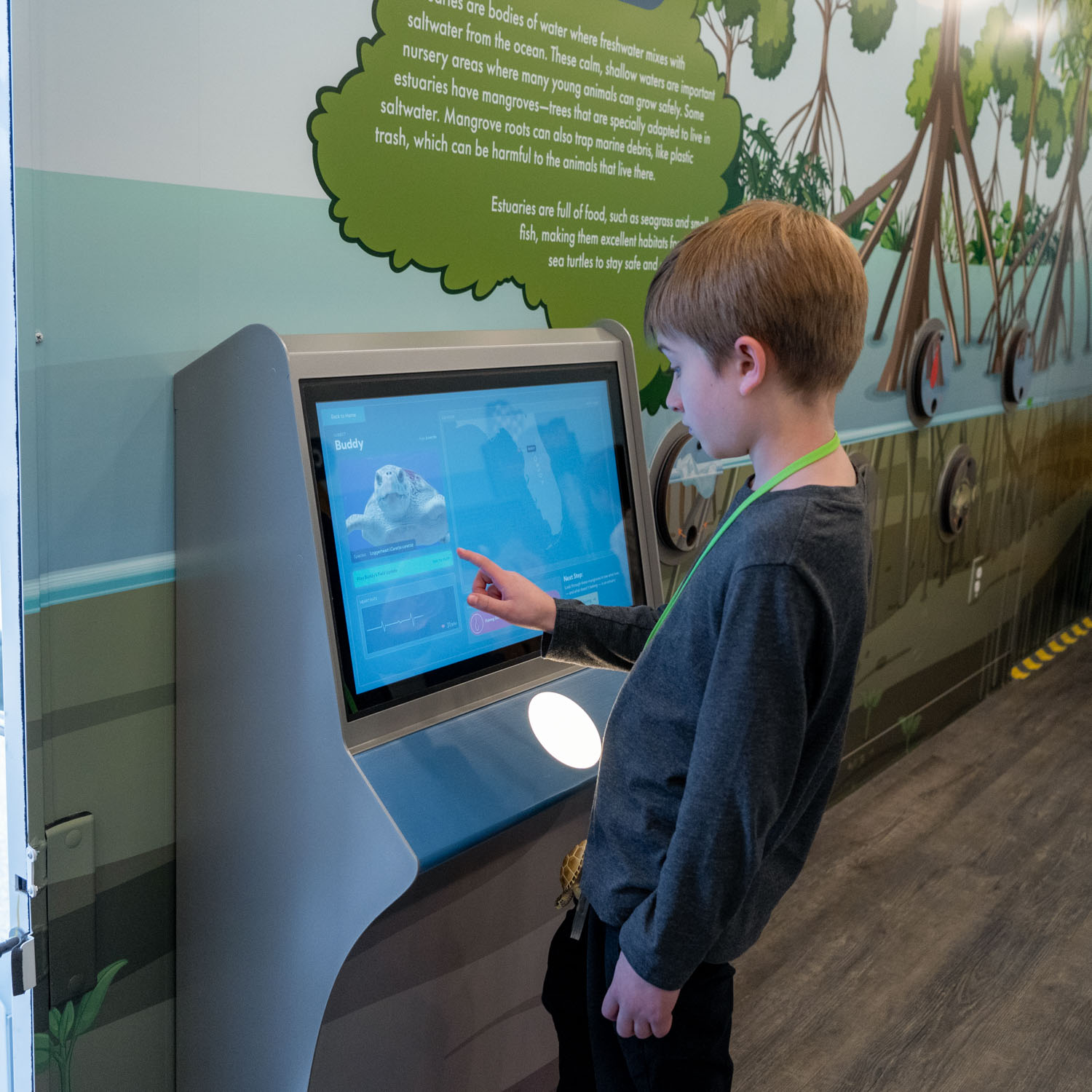
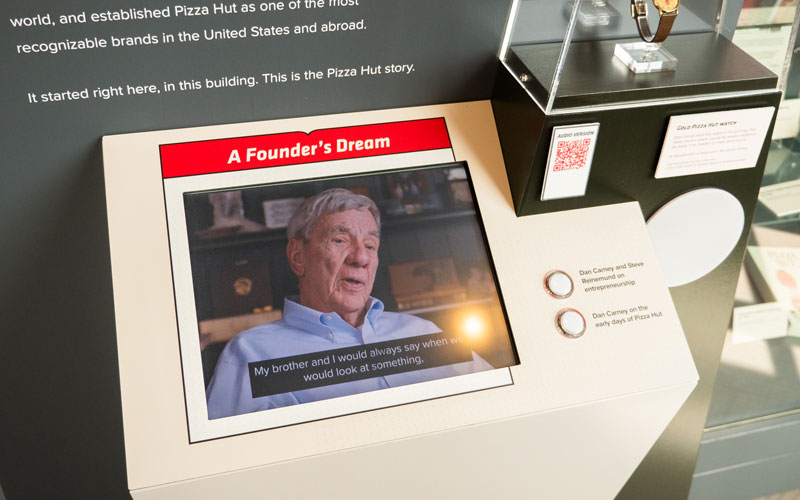
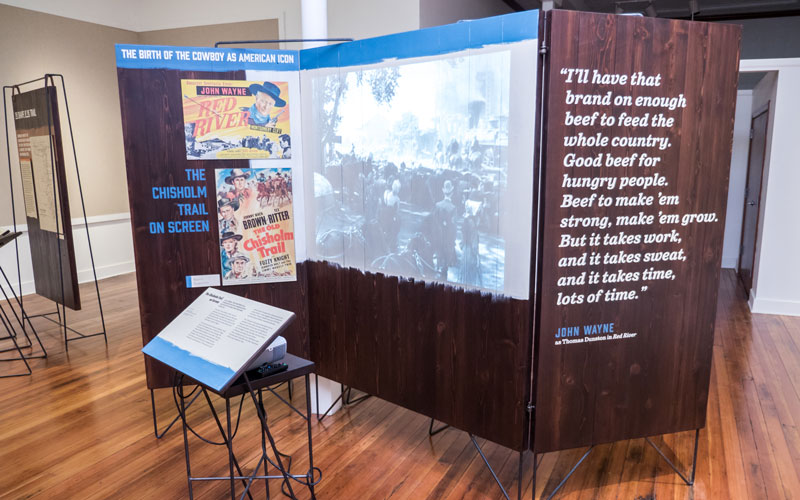
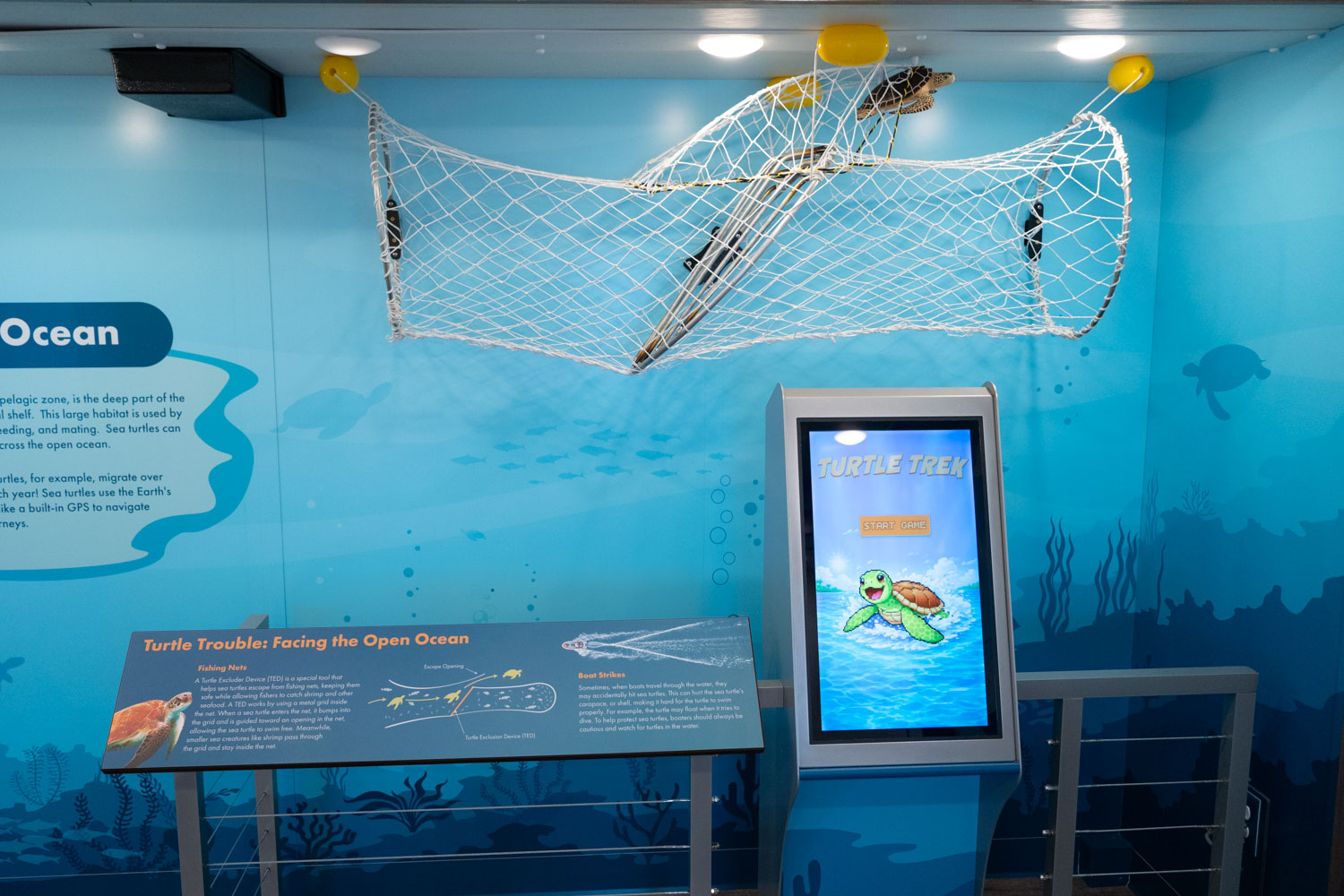
Touchscreens, push-button video and audio, projection, and playback that starts when someone walks up. A screen earns its place when there's more story than wall — oral histories, film clips, a map that changes with a tap — and when the content will change over the life of the exhibit.
What it takes: power at the wall, a computer or player somewhere it can breathe, and a plan for who updates the content. We design the interface to match the exhibit and keep every touch zone within reach-range heights.
Simplest version: one button, one clip. It costs a fraction of a touchscreen and visitors use it more.
We ask every time whether the added complication of technology is worth it. Often it is. Sometimes a flip door tells the story better.
Mechanical
Flip
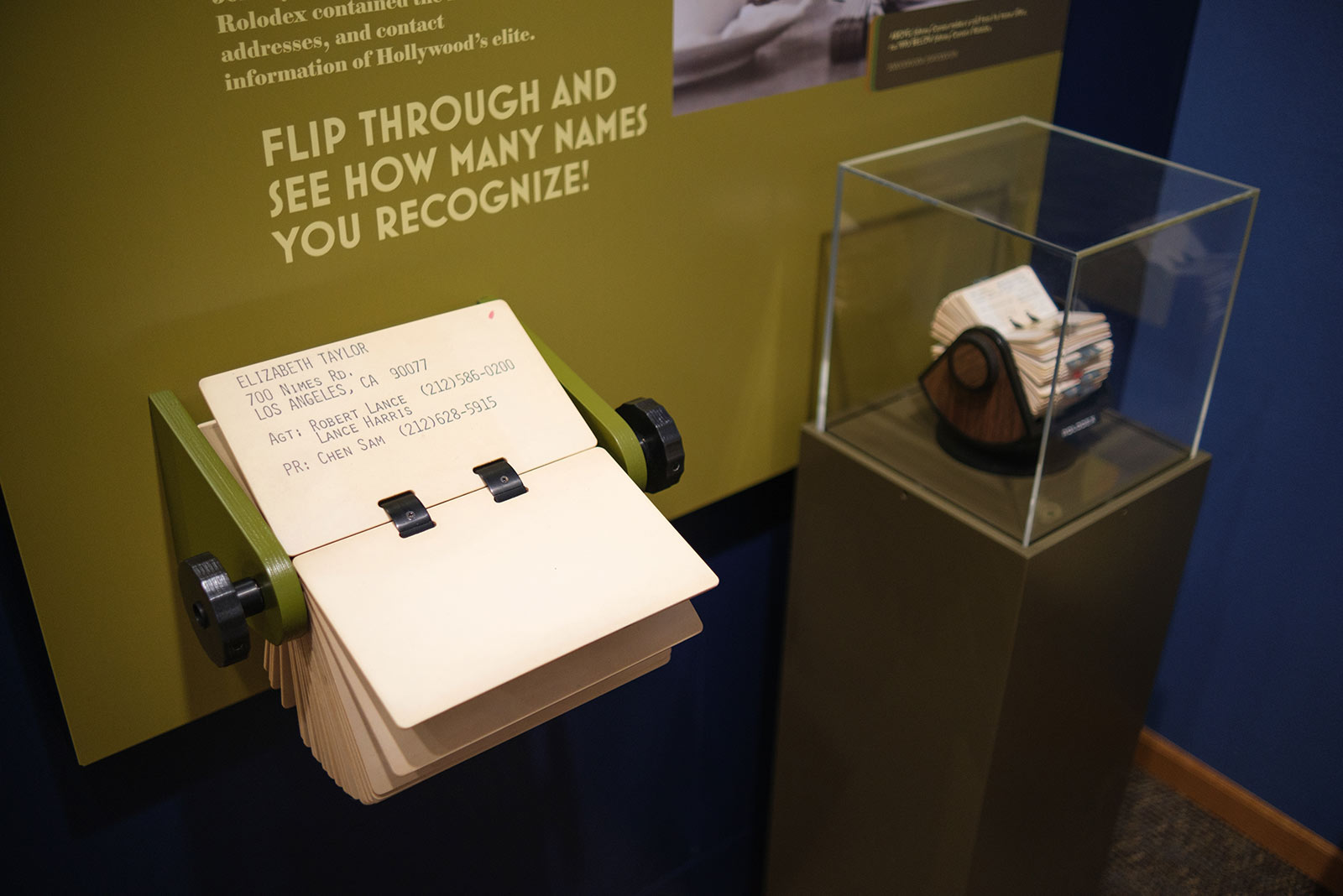
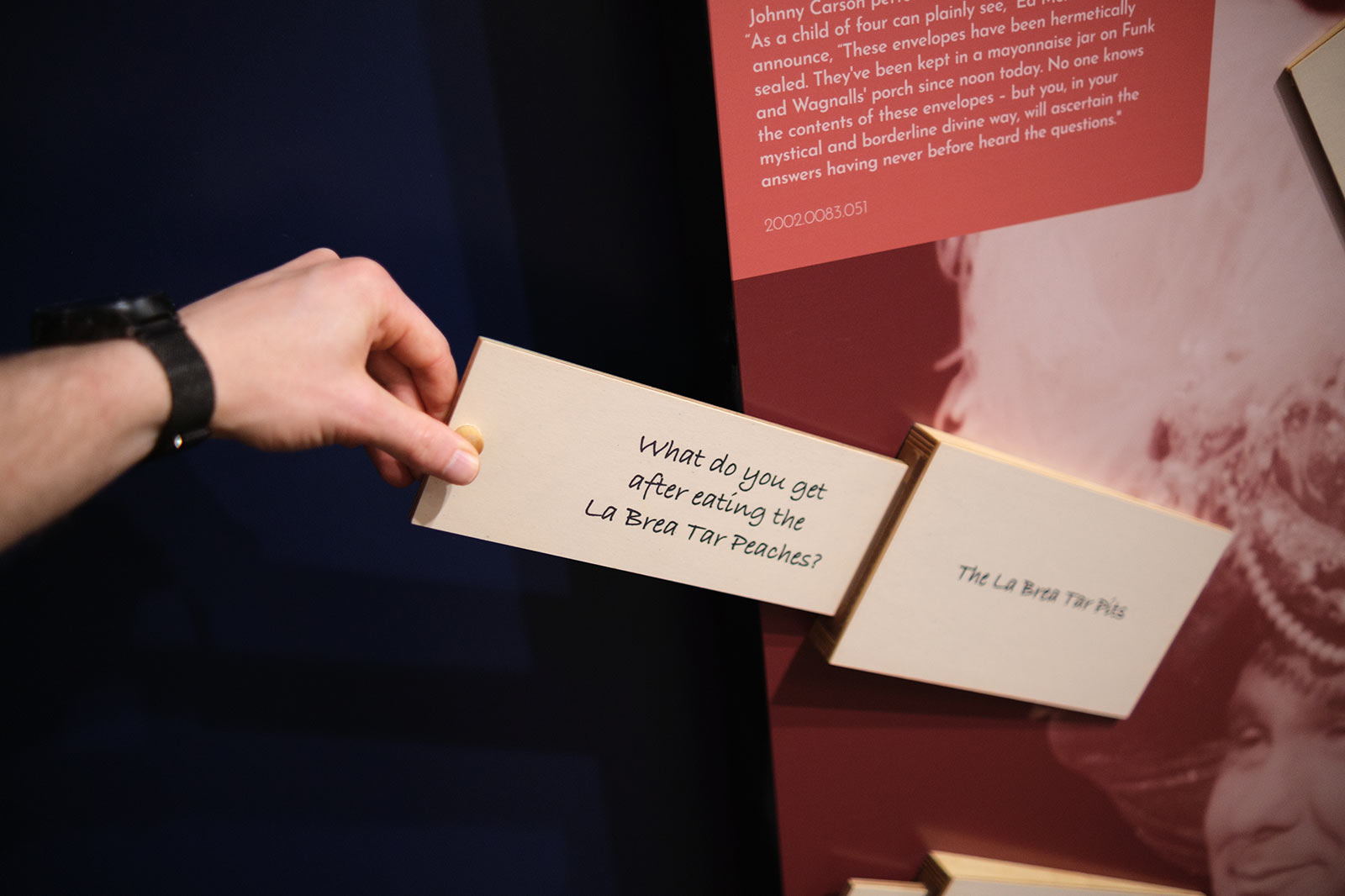
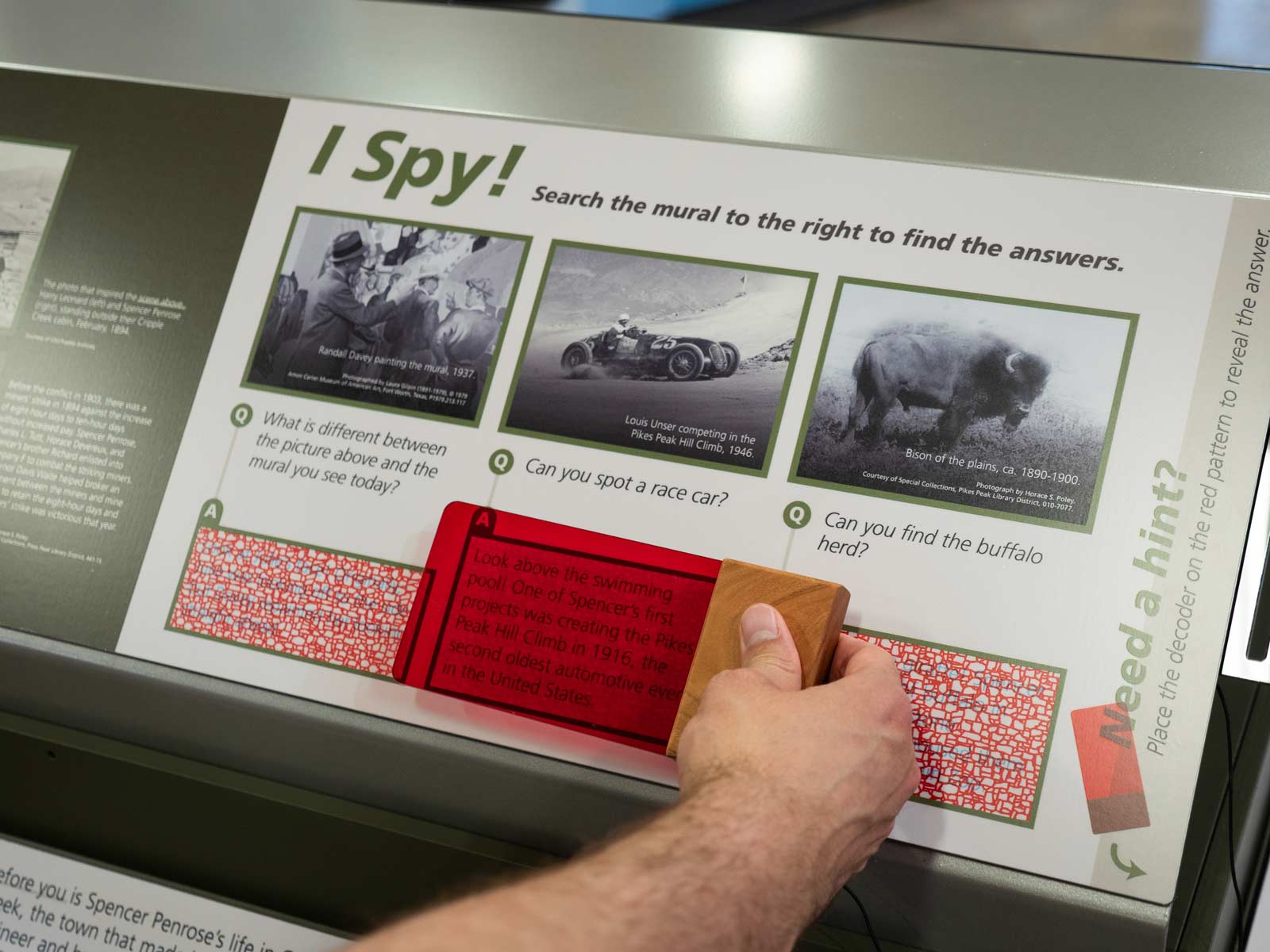
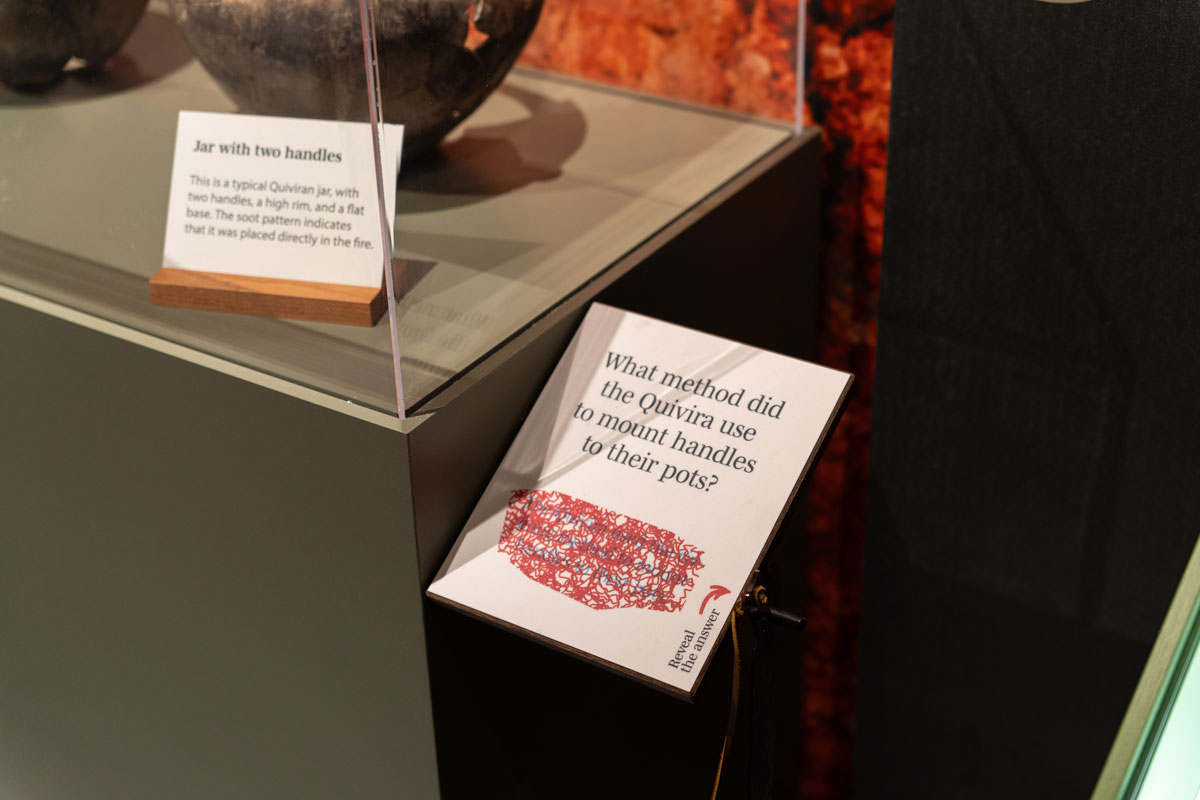
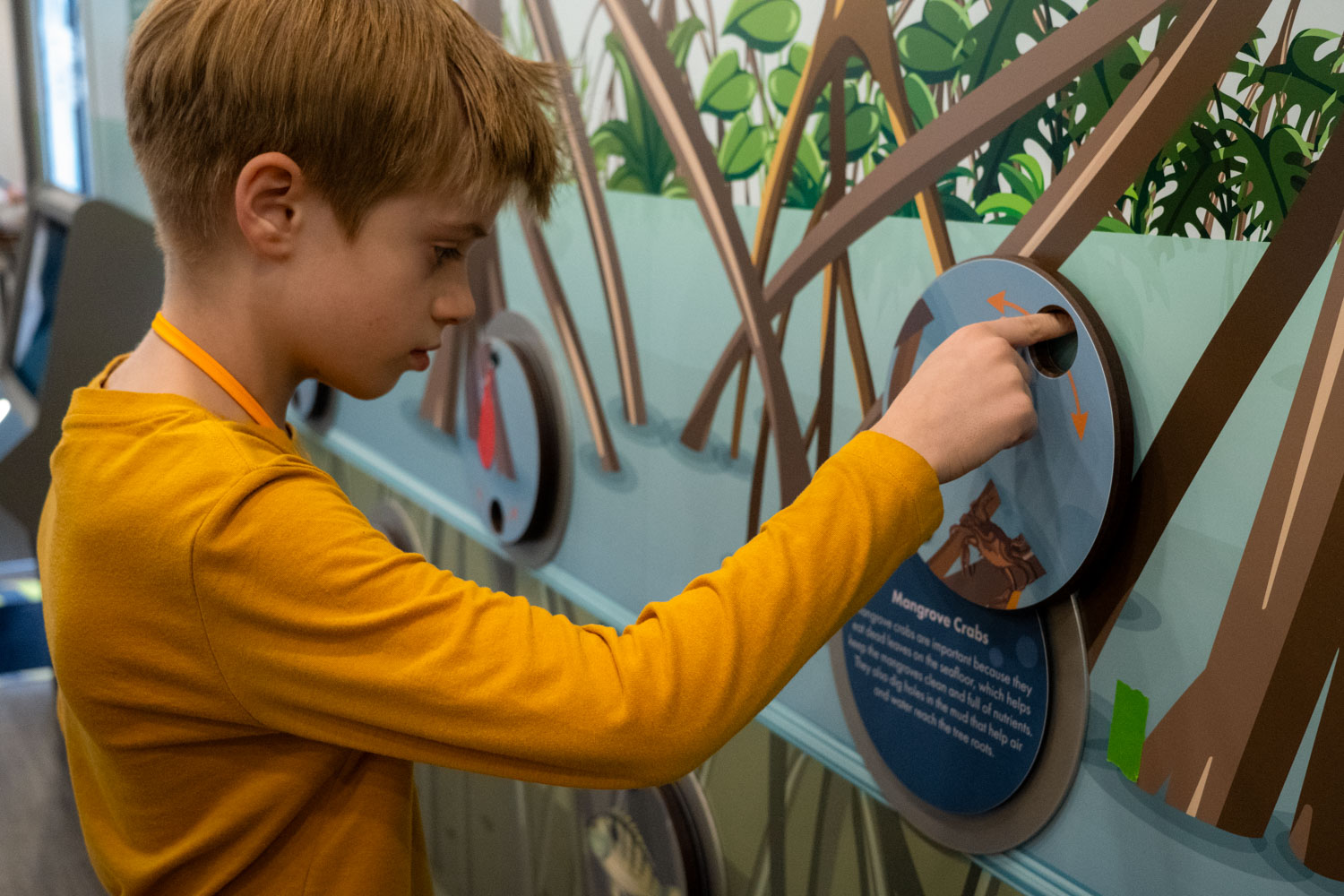
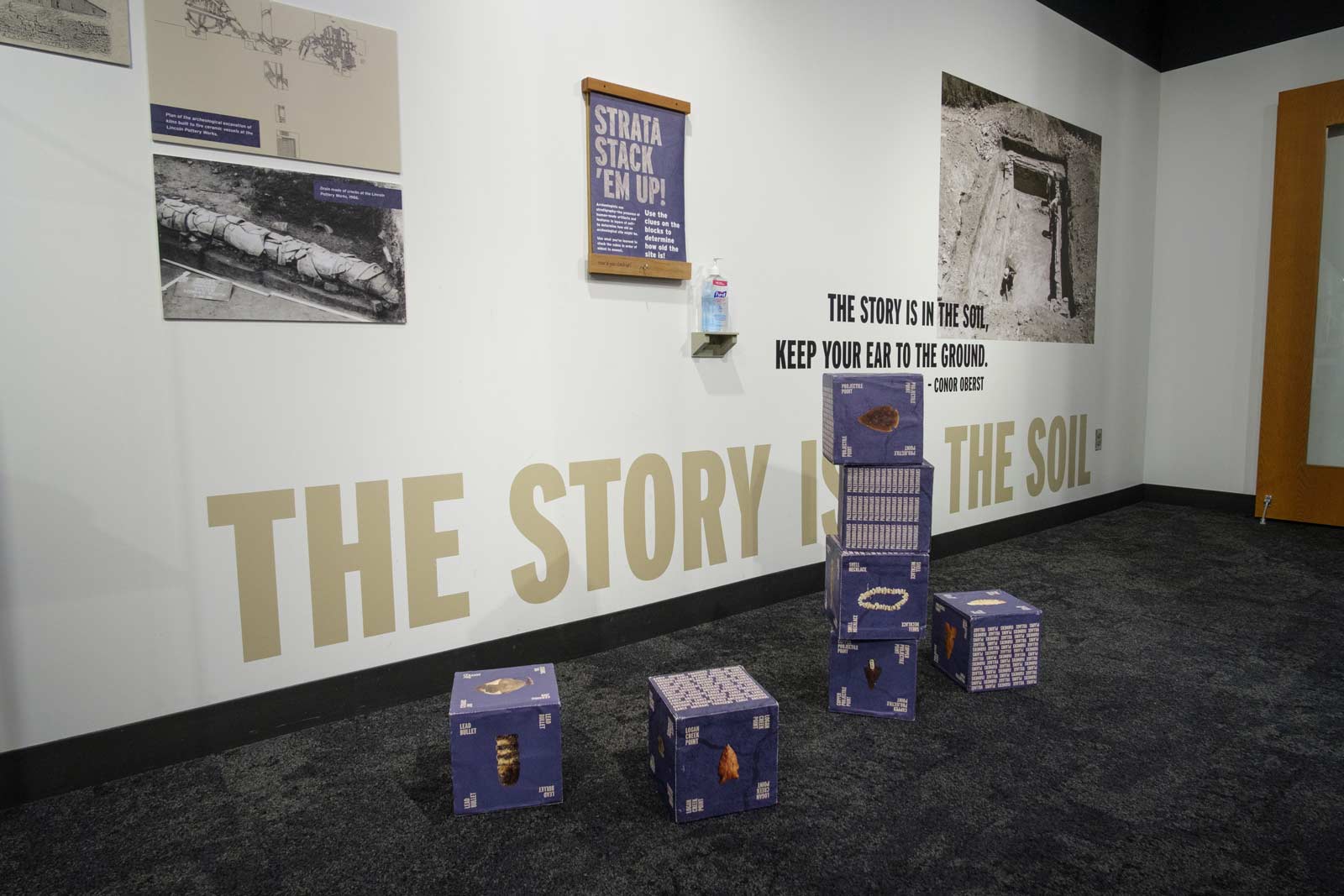
Doors that lift, panels that swivel, a Rolodex that spins, a filter that swings over a pattern to show the answer. A question on the outside, an answer underneath. These are the workhorses: nothing to boot, nothing to update, and a six-year-old and a sixty-year-old use them the same way.
What it takes: hardware that survives ten thousand cycles. We use through-bolted hinges, stainless pivots, and thick laminate or HDPE for anything that gets grabbed. Expect to replace a flipper or two over the years, not the unit.
Where it shines: reader rails and panels that would otherwise be a paragraph. A flip door turns a fact into a guess, and people remember their guesses.
Tactile
Touch
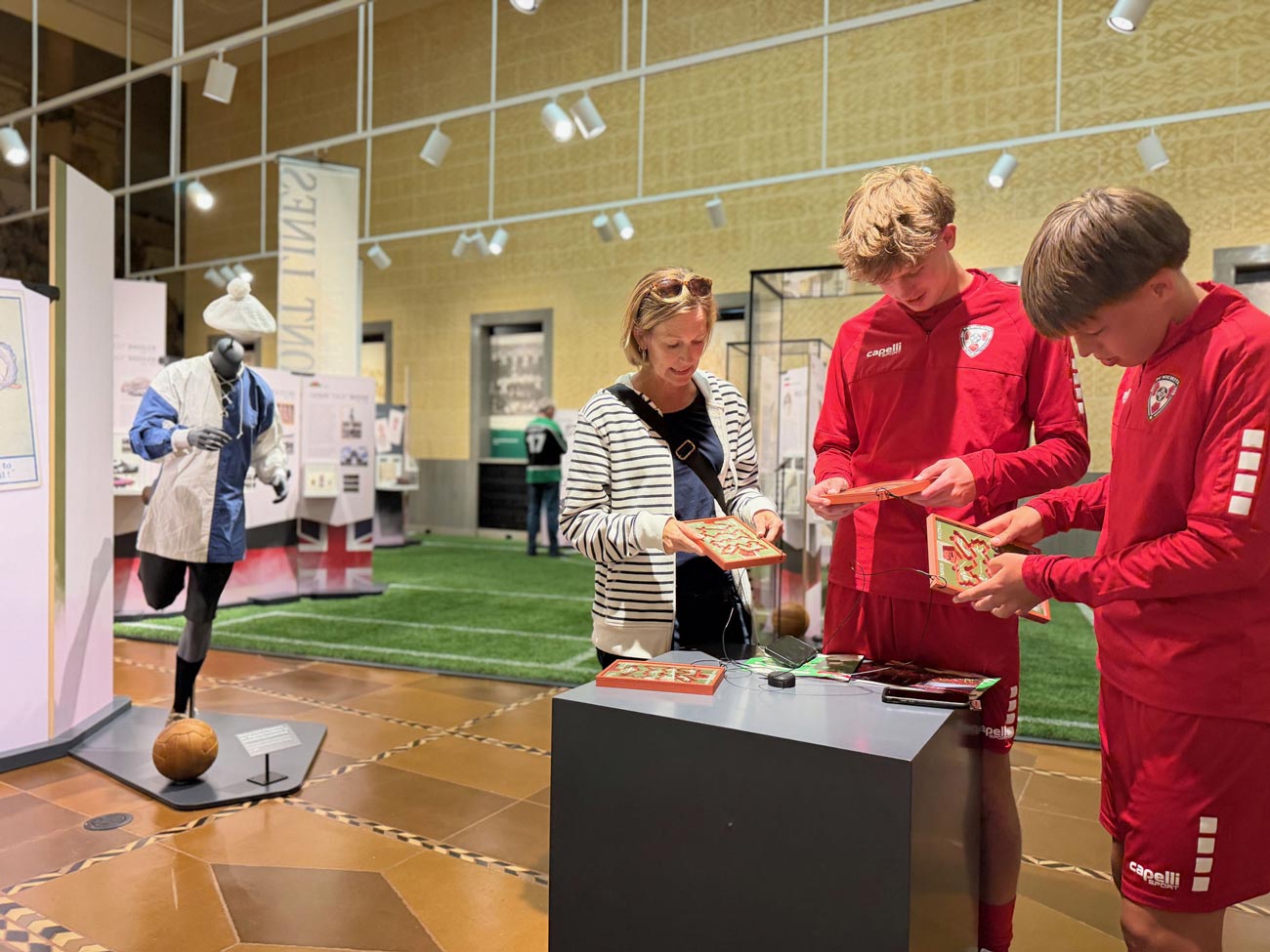
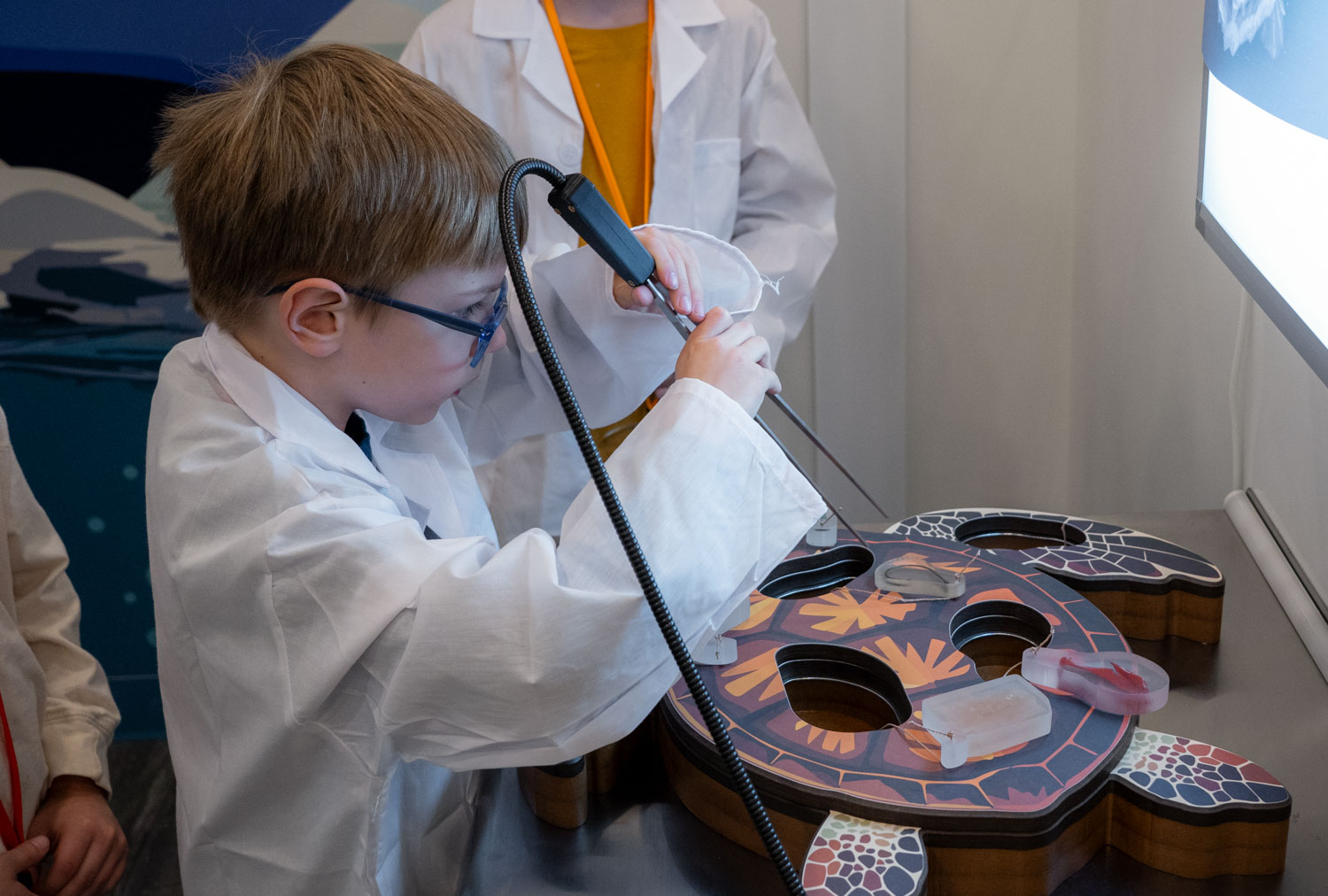
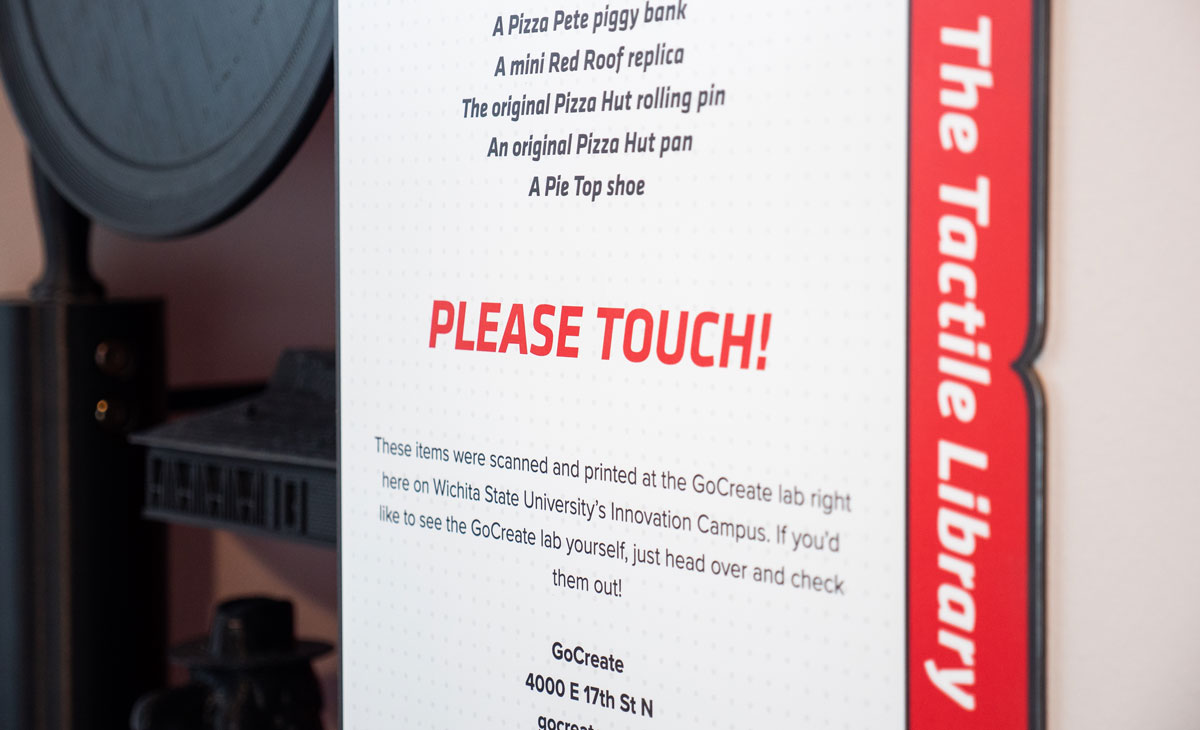
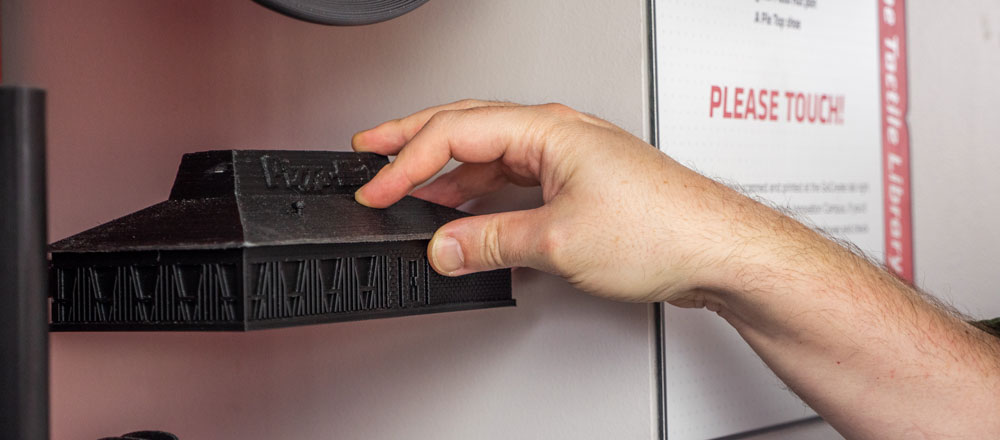
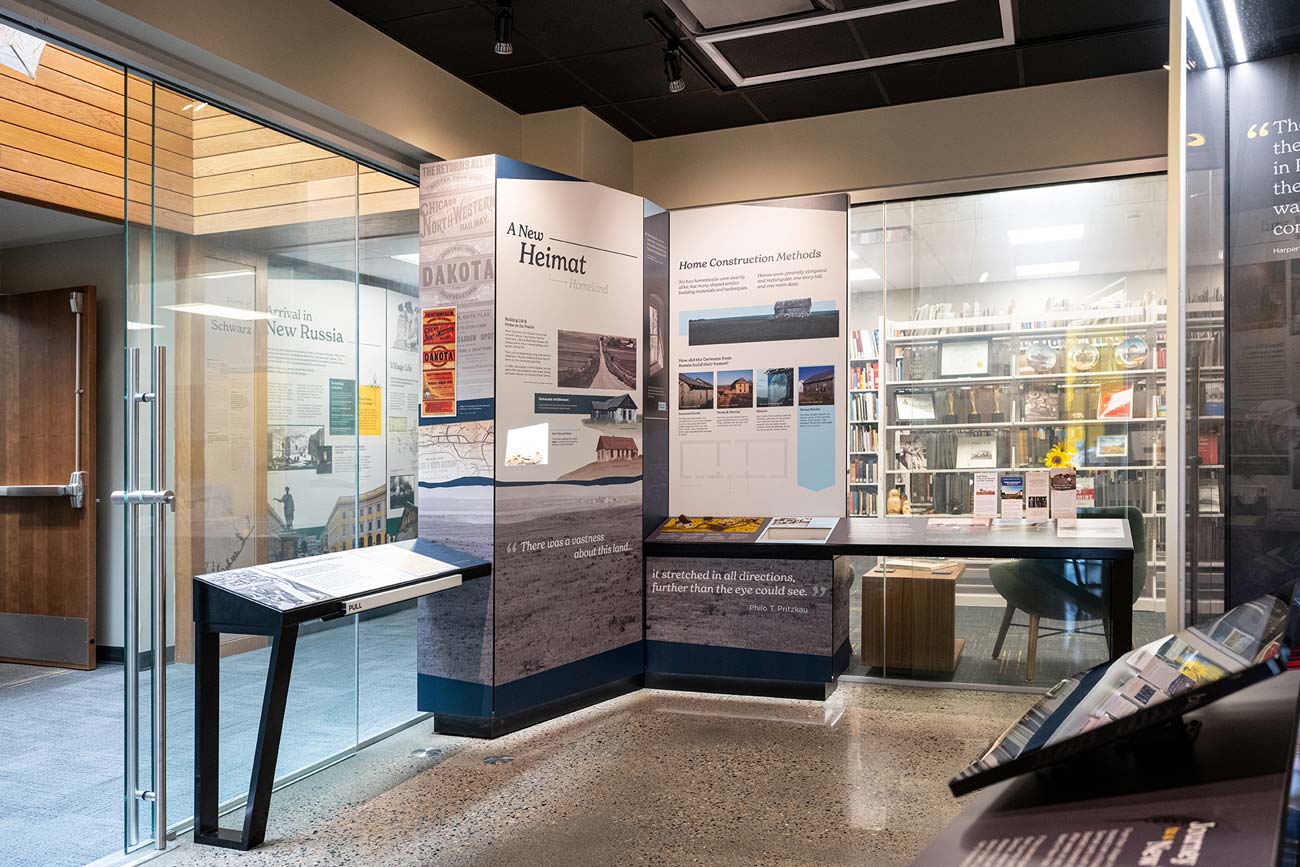
Things meant to be handled: 3D-printed copies of the artifacts behind glass, scale models, material samples, a figurine you carry through the exhibit. Tactile pieces are the fastest way to open a collection to visitors who can't see it, and everyone else reaches for them too.
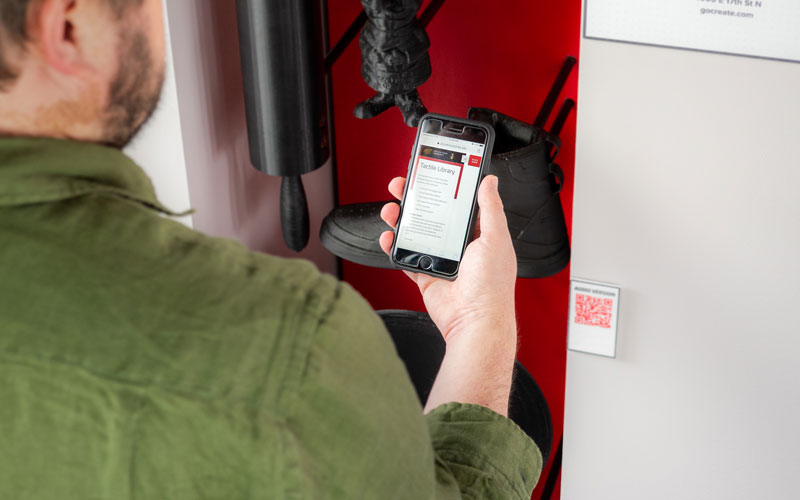
What it takes: a scan or model of the original, a print or casting in a material that can be cleaned, and a mount that holds it at a reachable height. Braille and a QR link to an audio description finish the job.
Good pairing: tactile plus a screen — an NFC chip inside the object tells the kiosk who's holding it.
Play structures
Climb
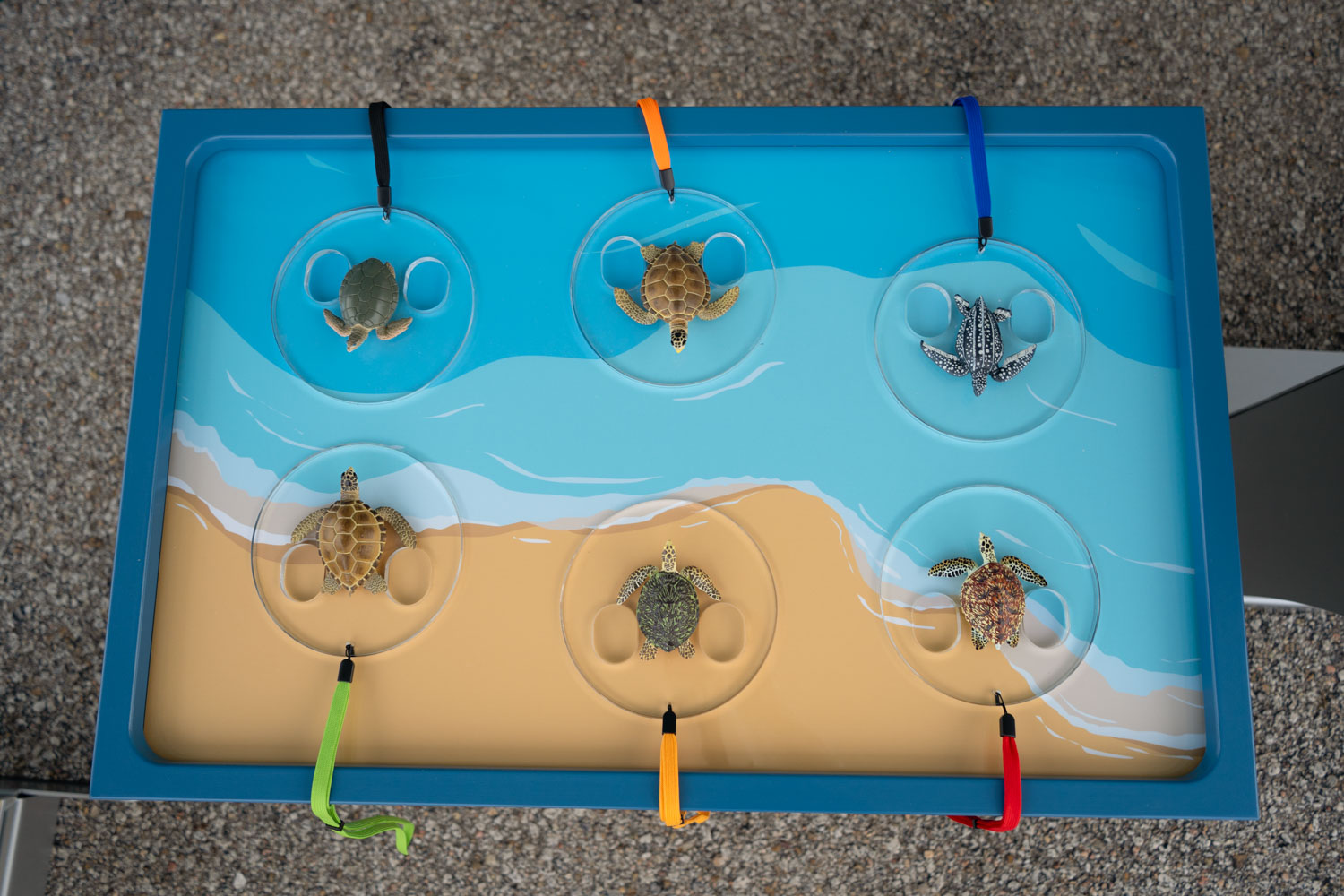
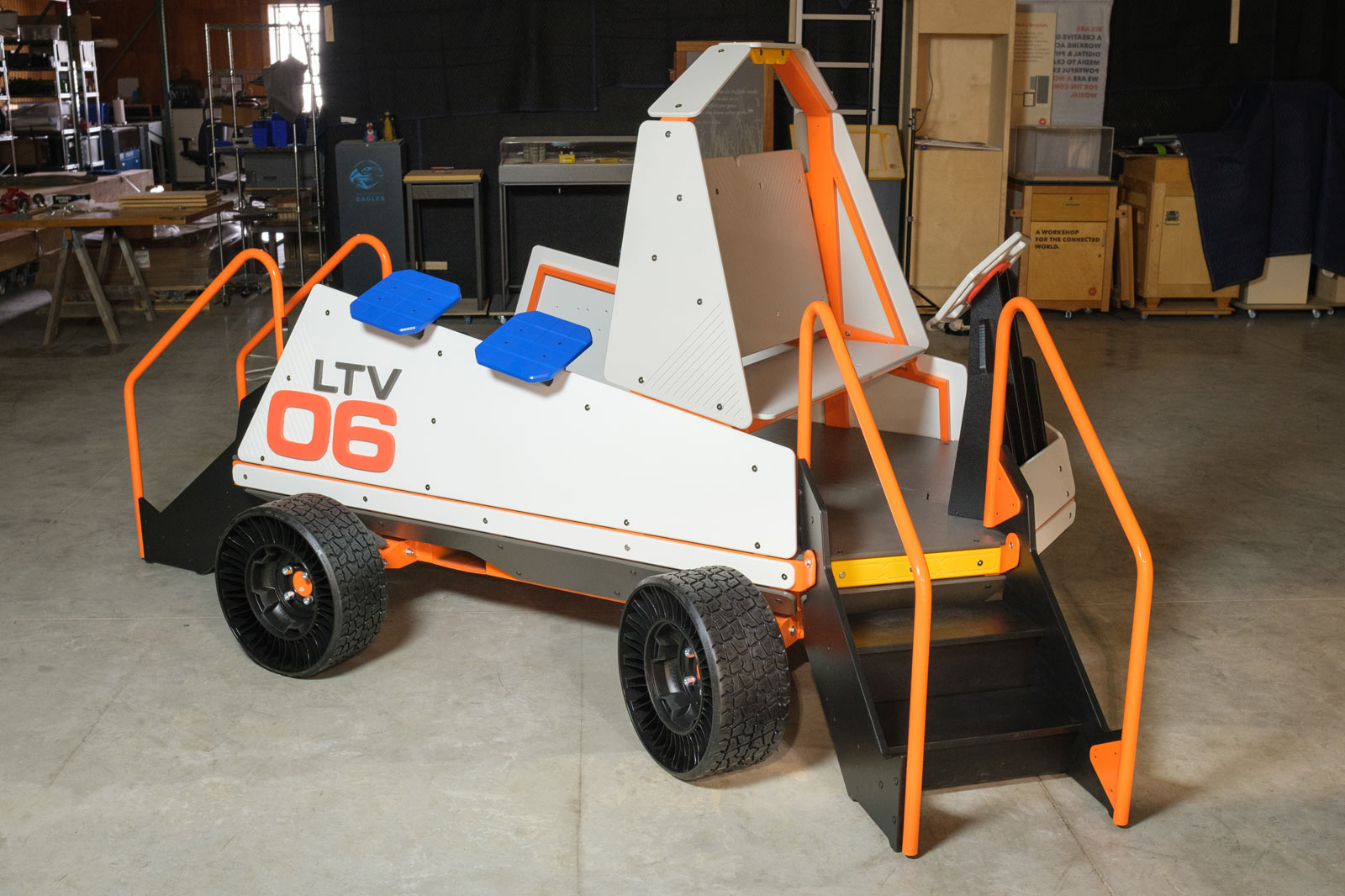
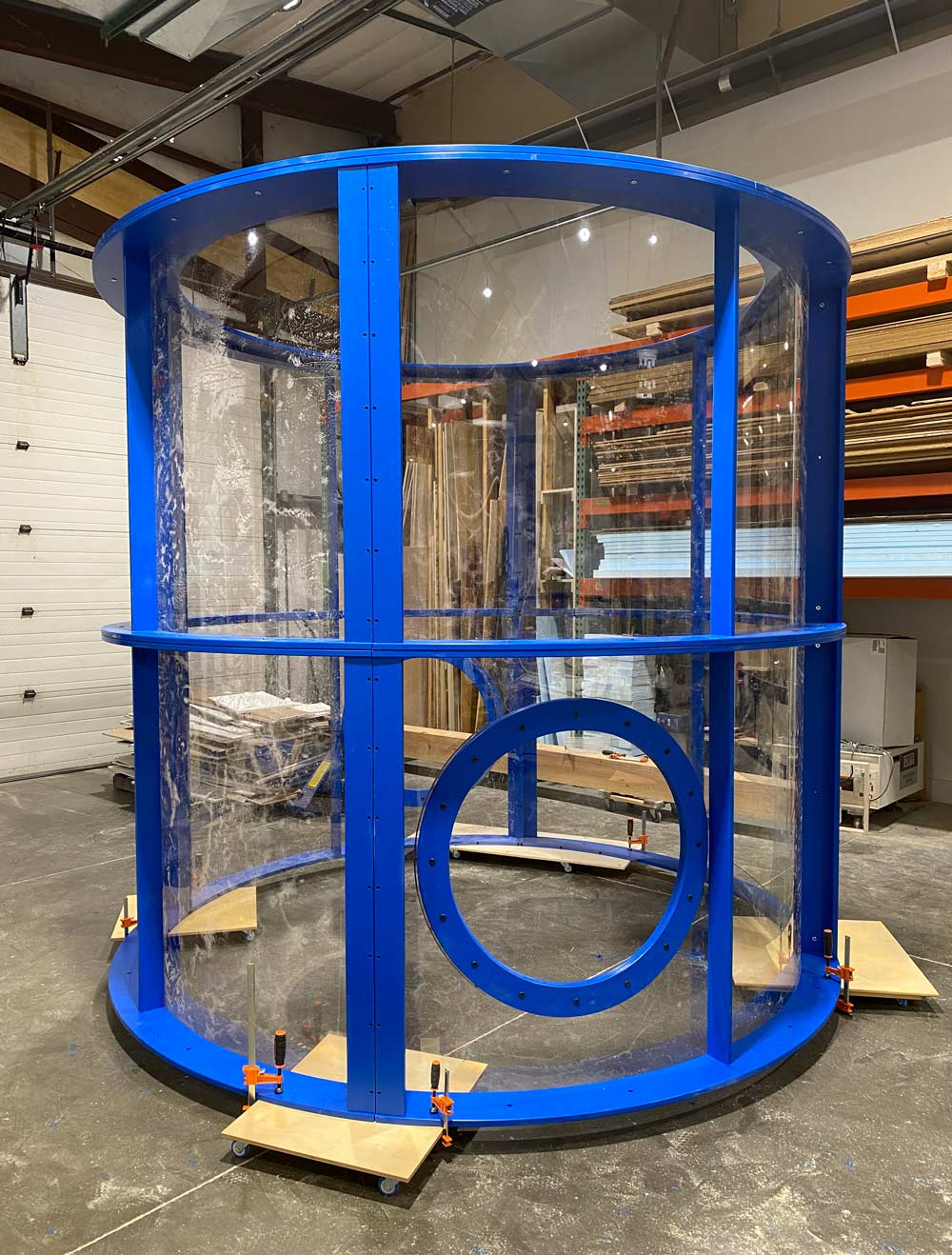
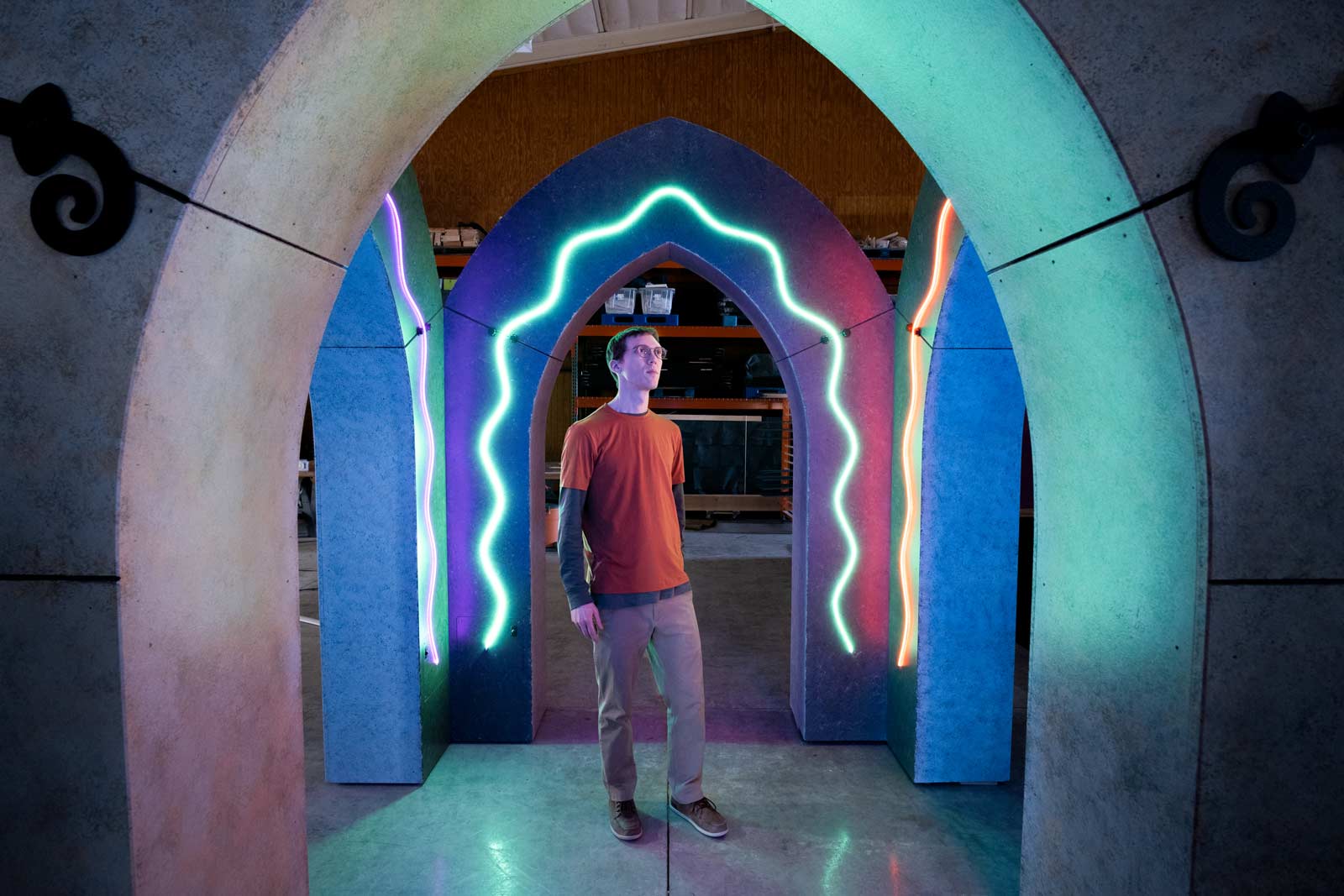
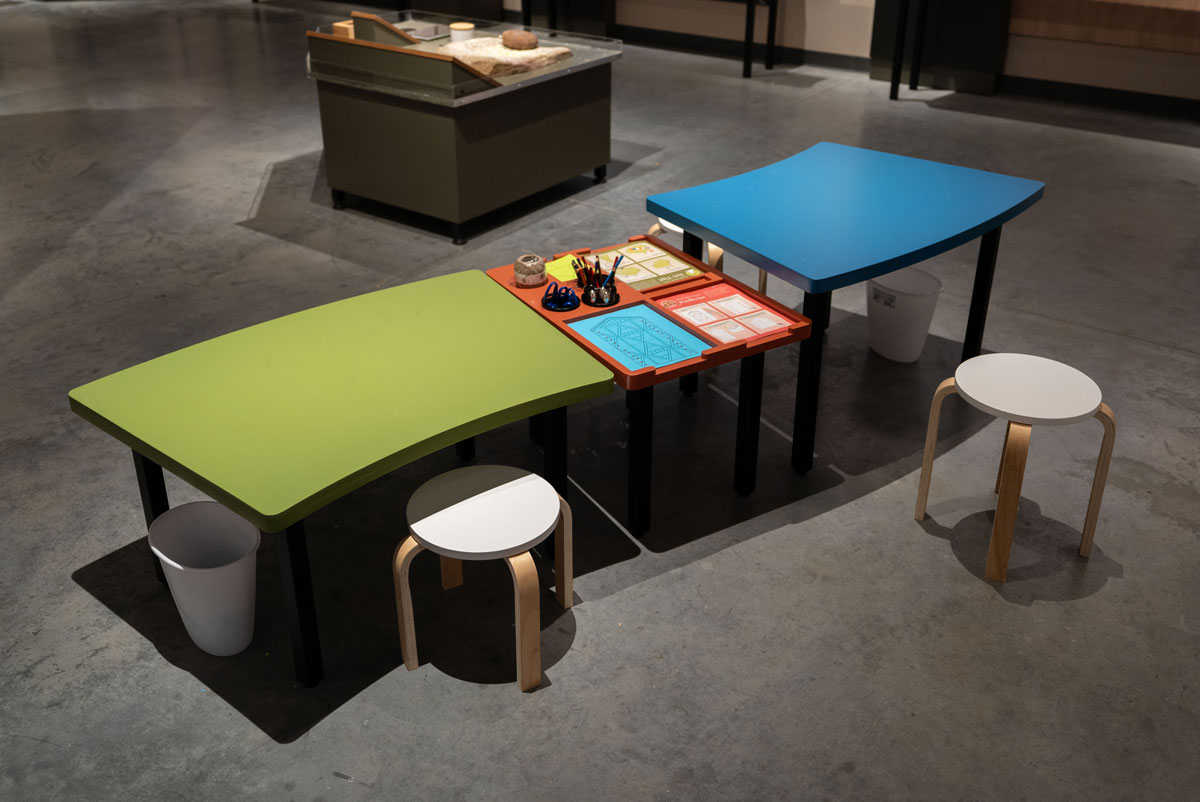
A rover with a wheel that turns, a room that whirls, an archway to walk through, a table stocked for making things. For the youngest visitors the exhibit is the interactive, so we build it to be climbed on.
What it takes: a welded steel frame under whatever the visitor sees, radiused edges, finishes that wipe clean, and a review against the same standards you'd apply to a playground slide. Anything that moves gets a pinch-point check.
Lowest-cost version: an activity table with materials and instructions. It runs itself.
Participation
Mark
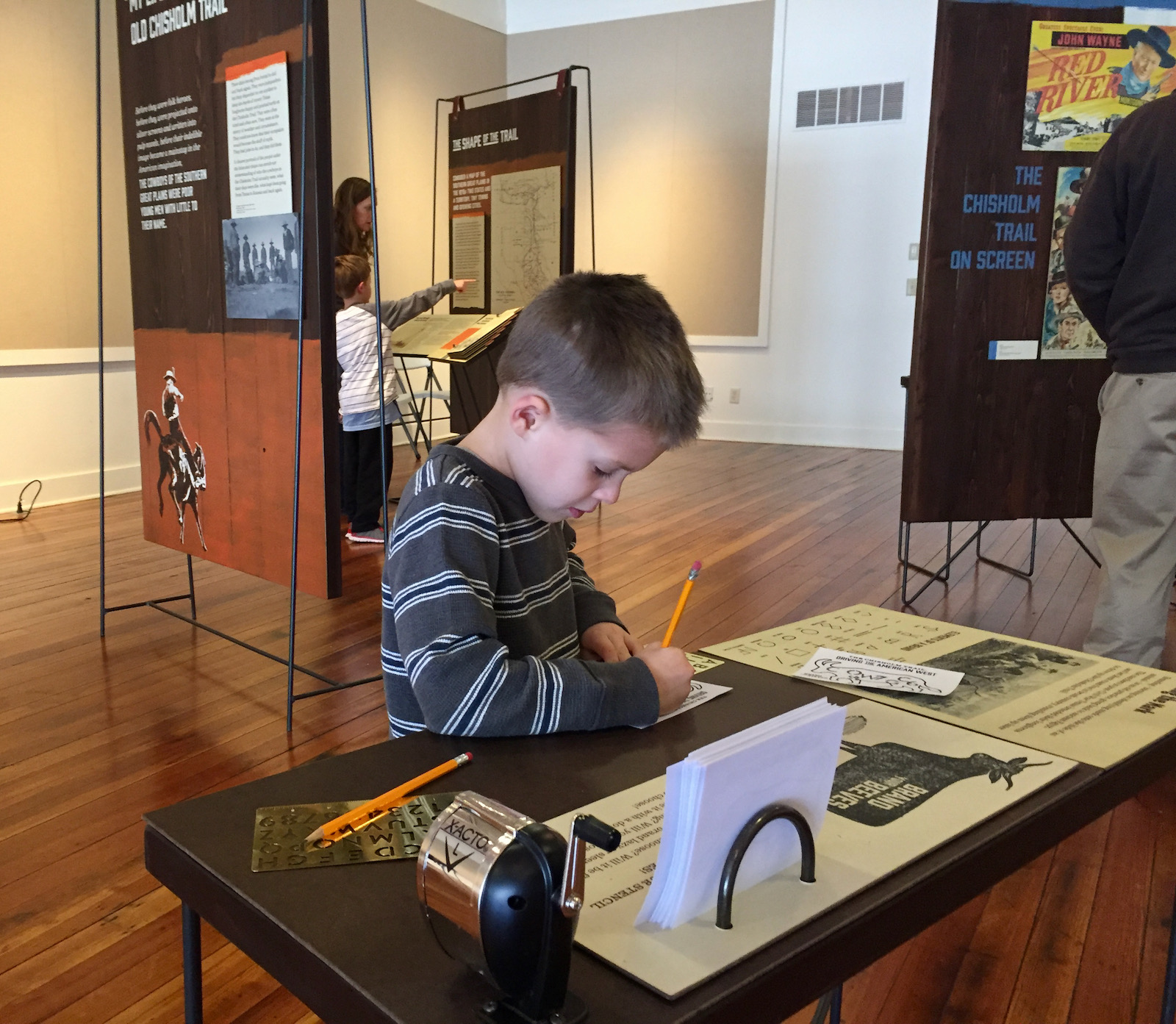
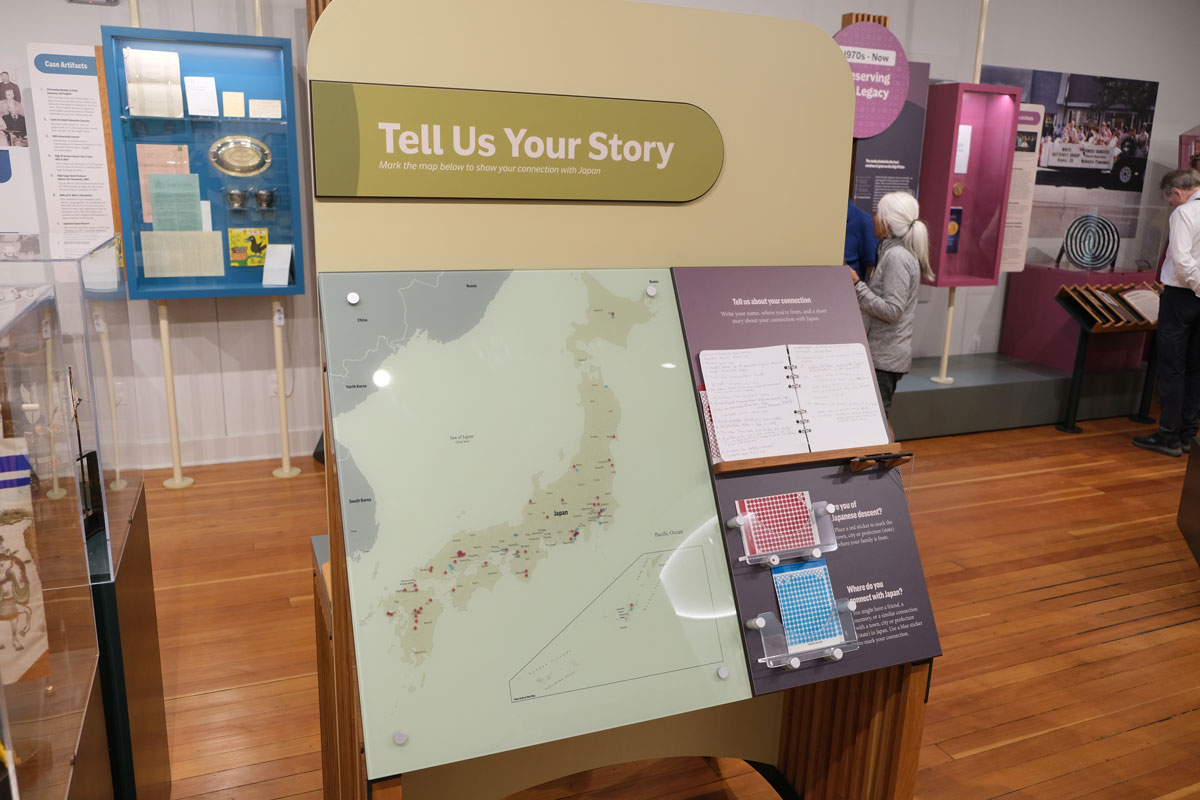
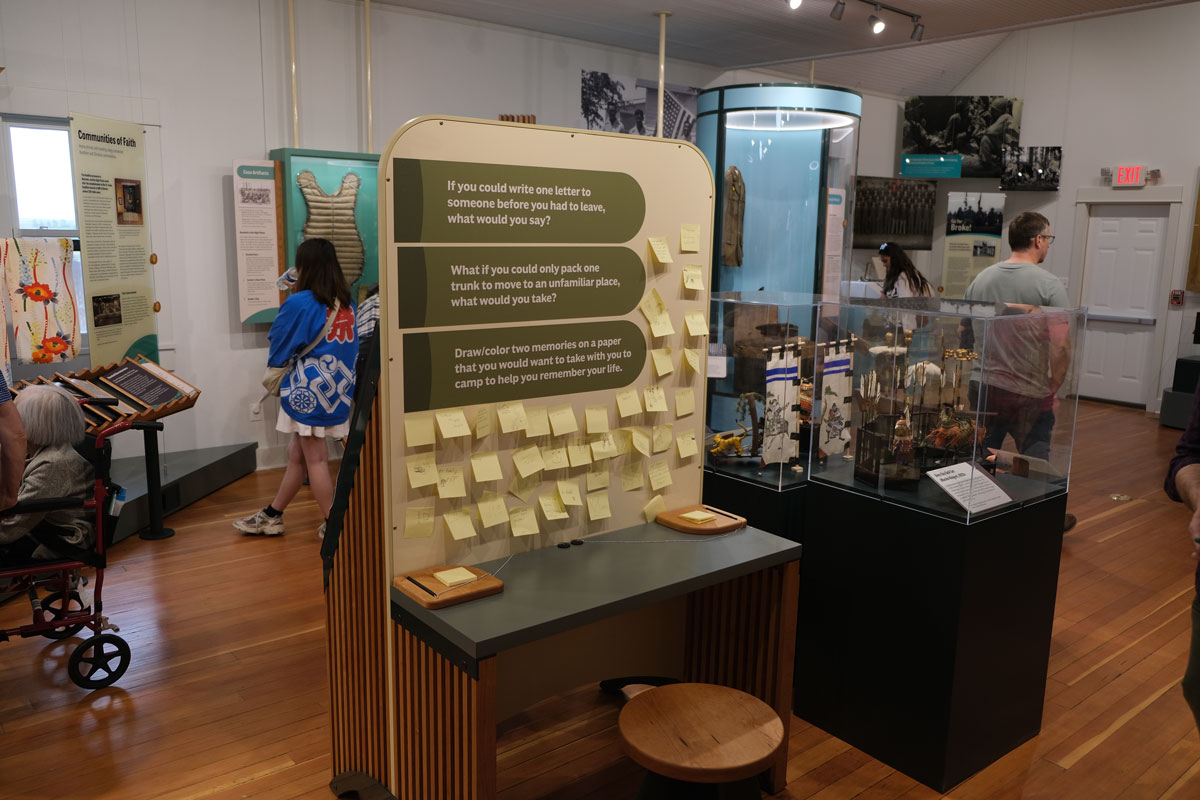
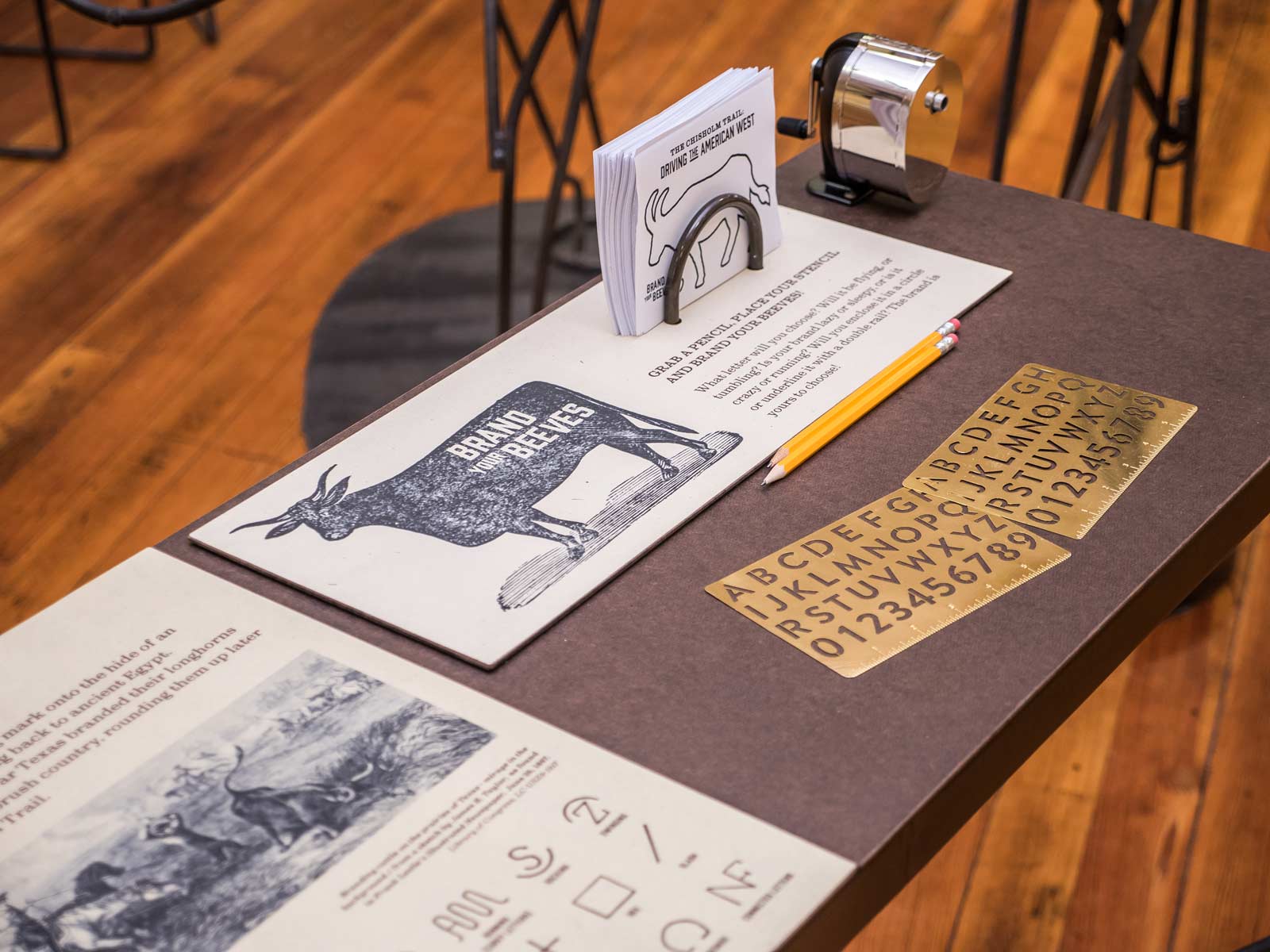
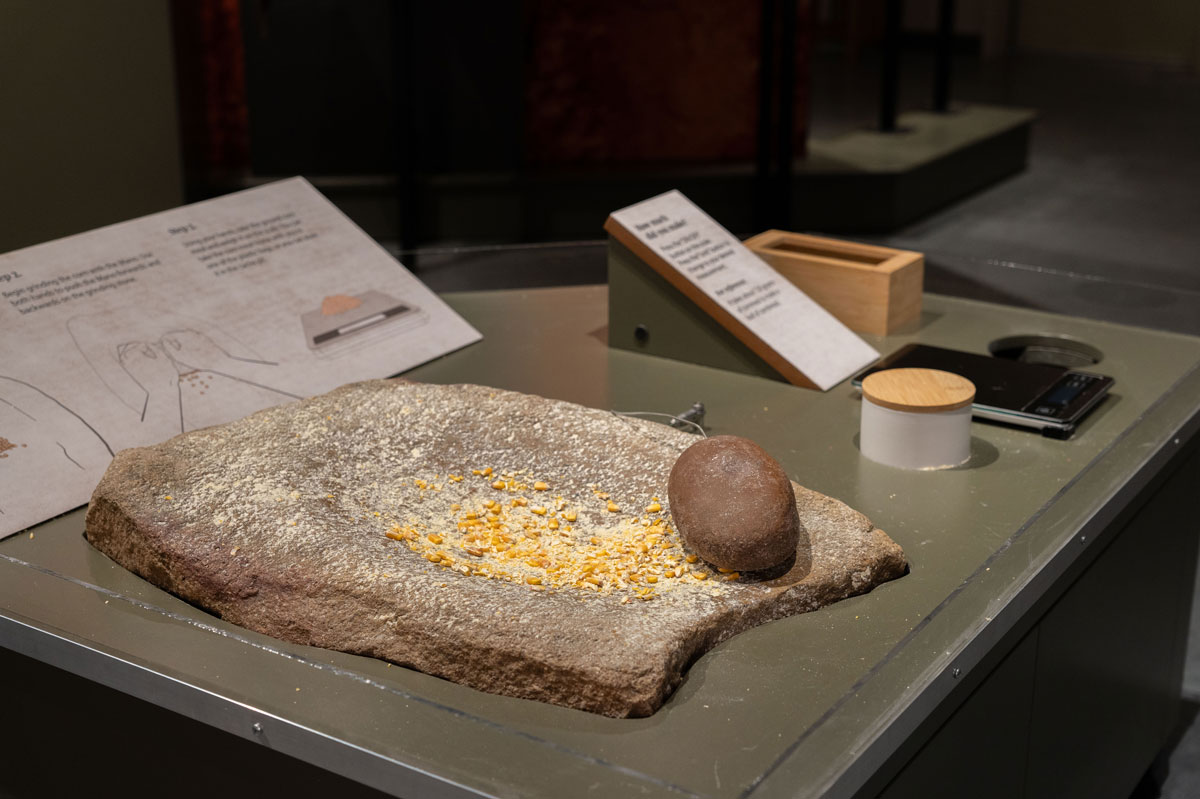
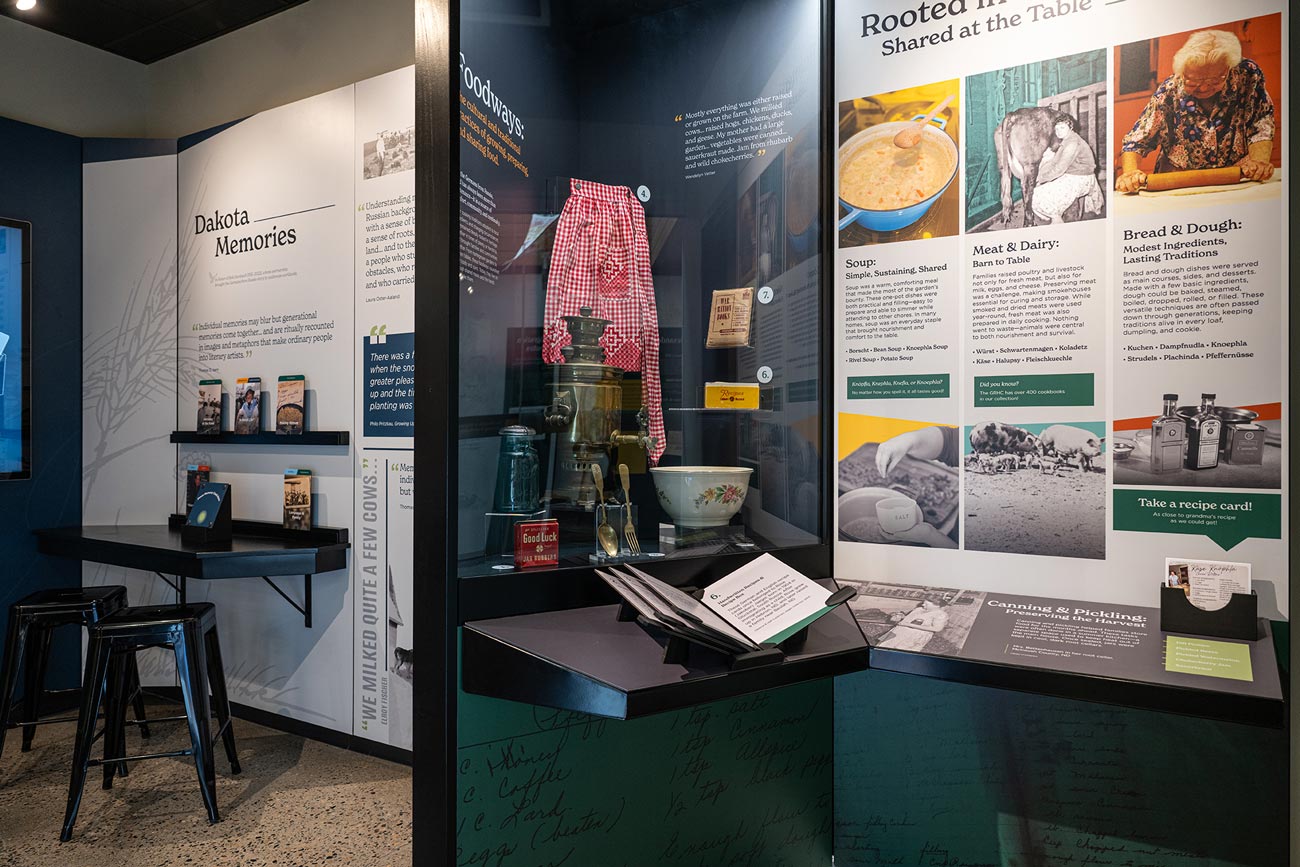
Stickers on a map, a prompt board, a stencil, a grinding stone, a recipe card to take home. No power, no moving parts, and people linger at these longer than at anything with a screen. The exhibit fills up with the visitors' own marks.
What it takes: consumables somebody restocks — stickers, sticky notes, paper — and a surface that can be cleared. We print maps on the back of glass so the stickers scrape off, and mount prompt boards low enough for a wheelchair or a six-year-old.
Why we keep building them: they work on day one and day one thousand, and the responses tell you what your visitors actually think.
Scenic environments
Step in
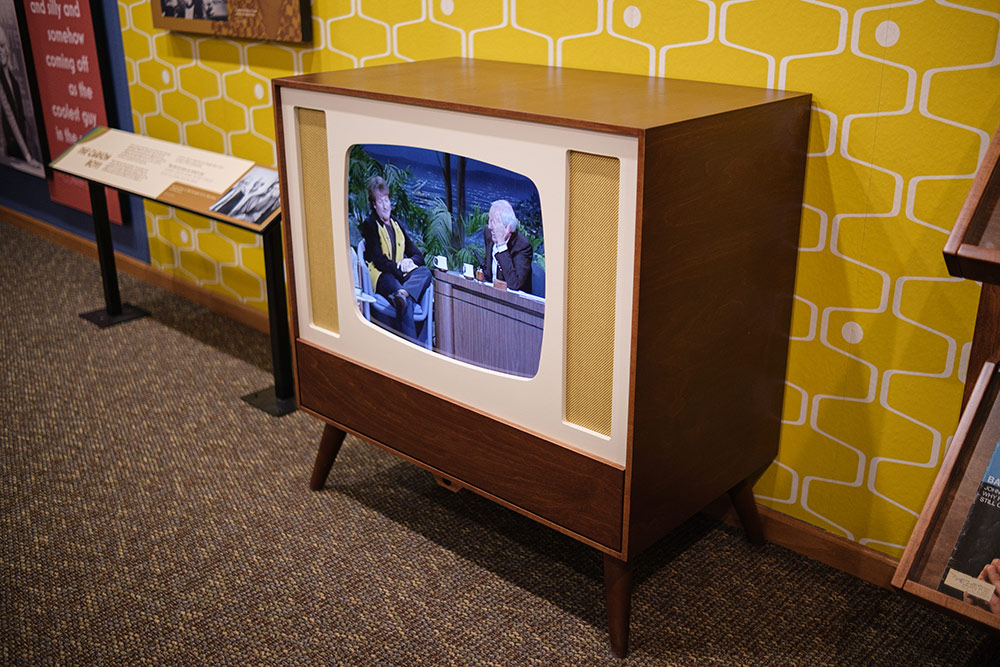
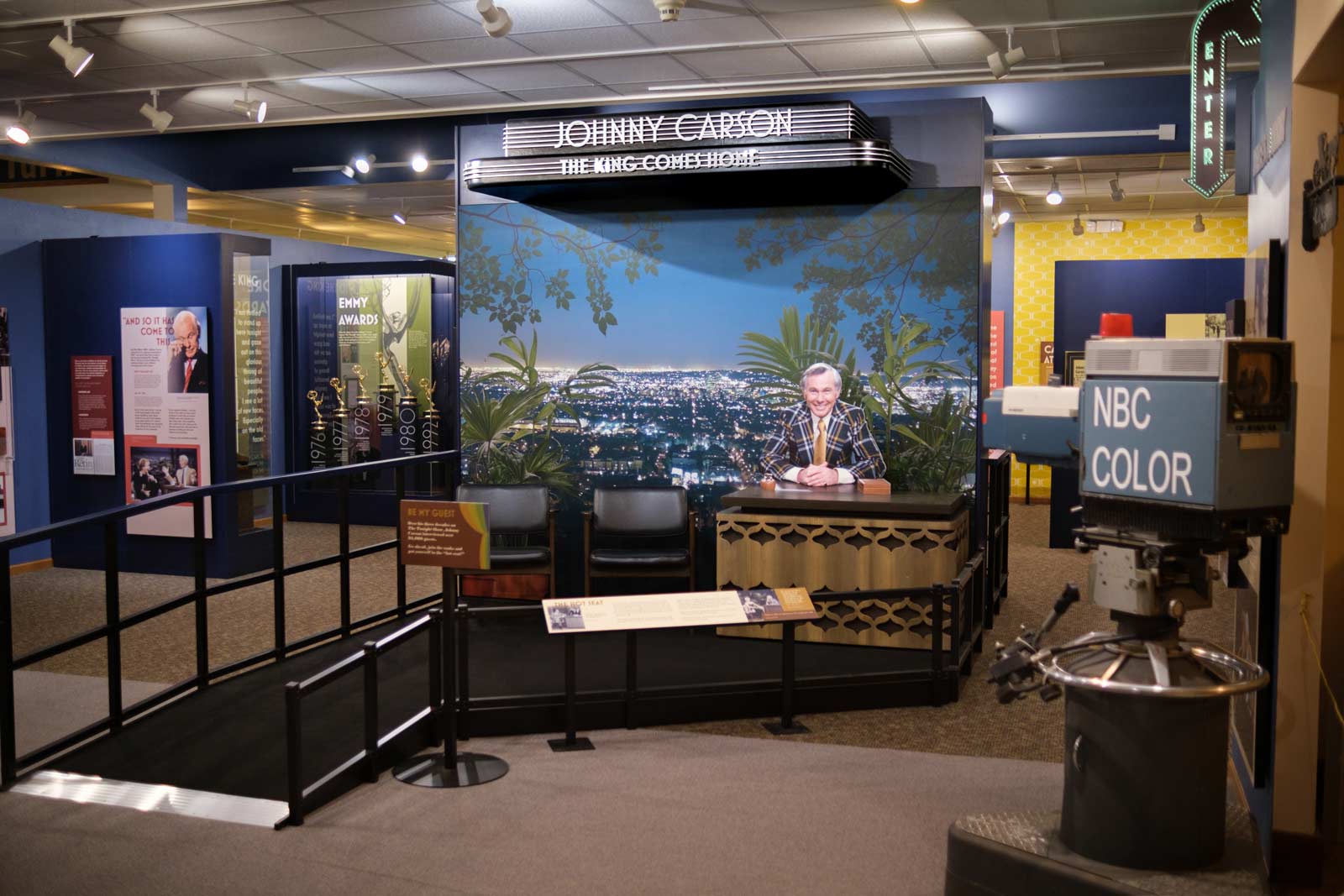
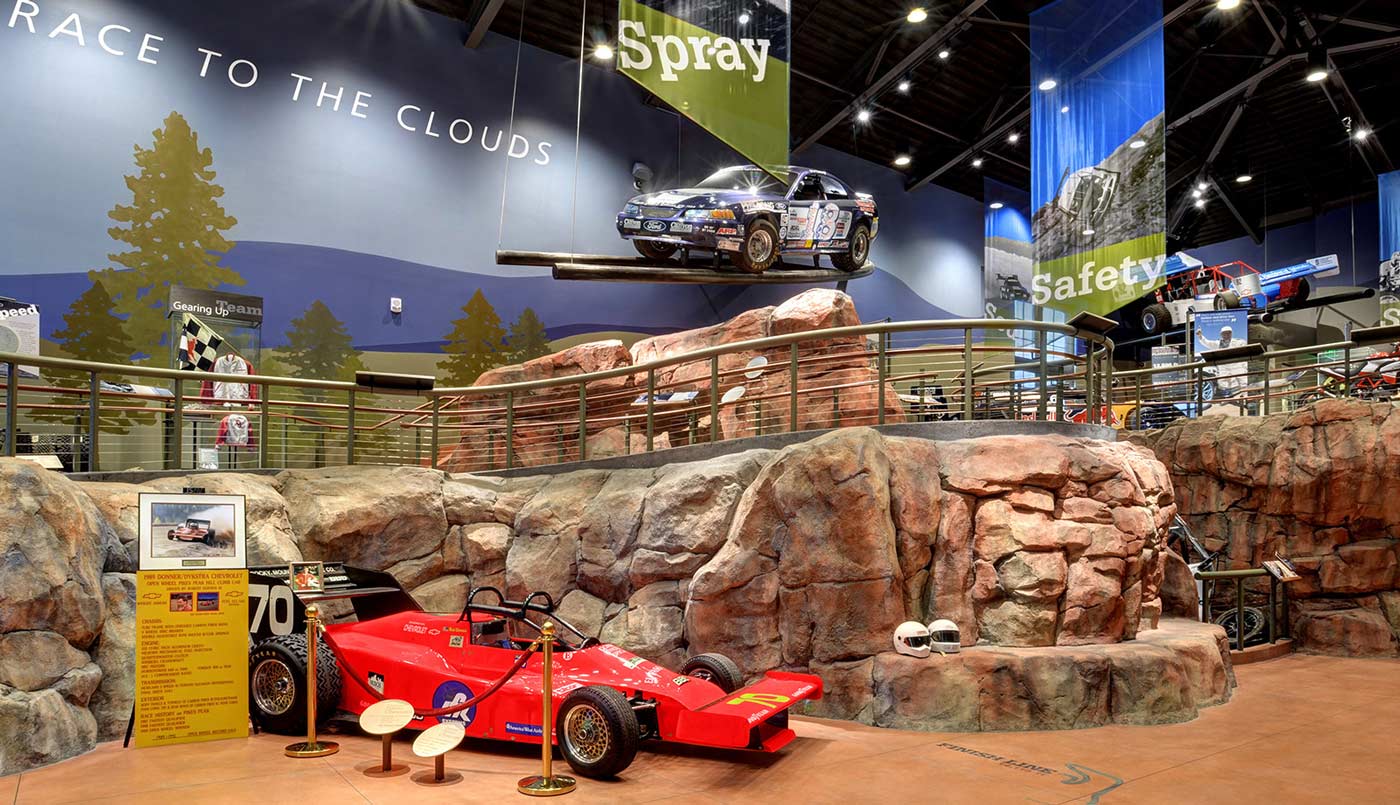
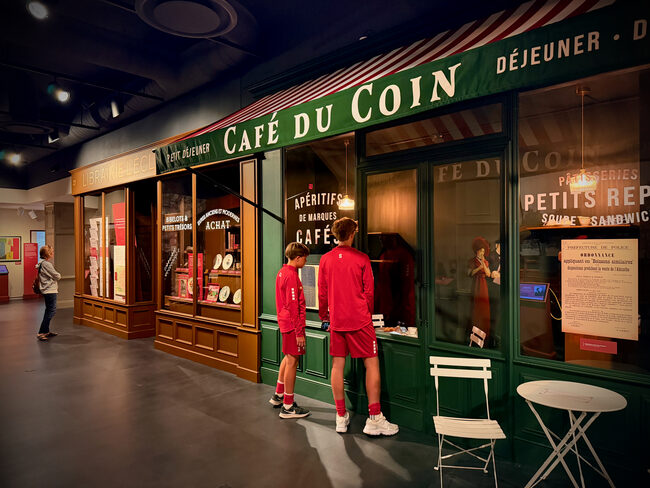
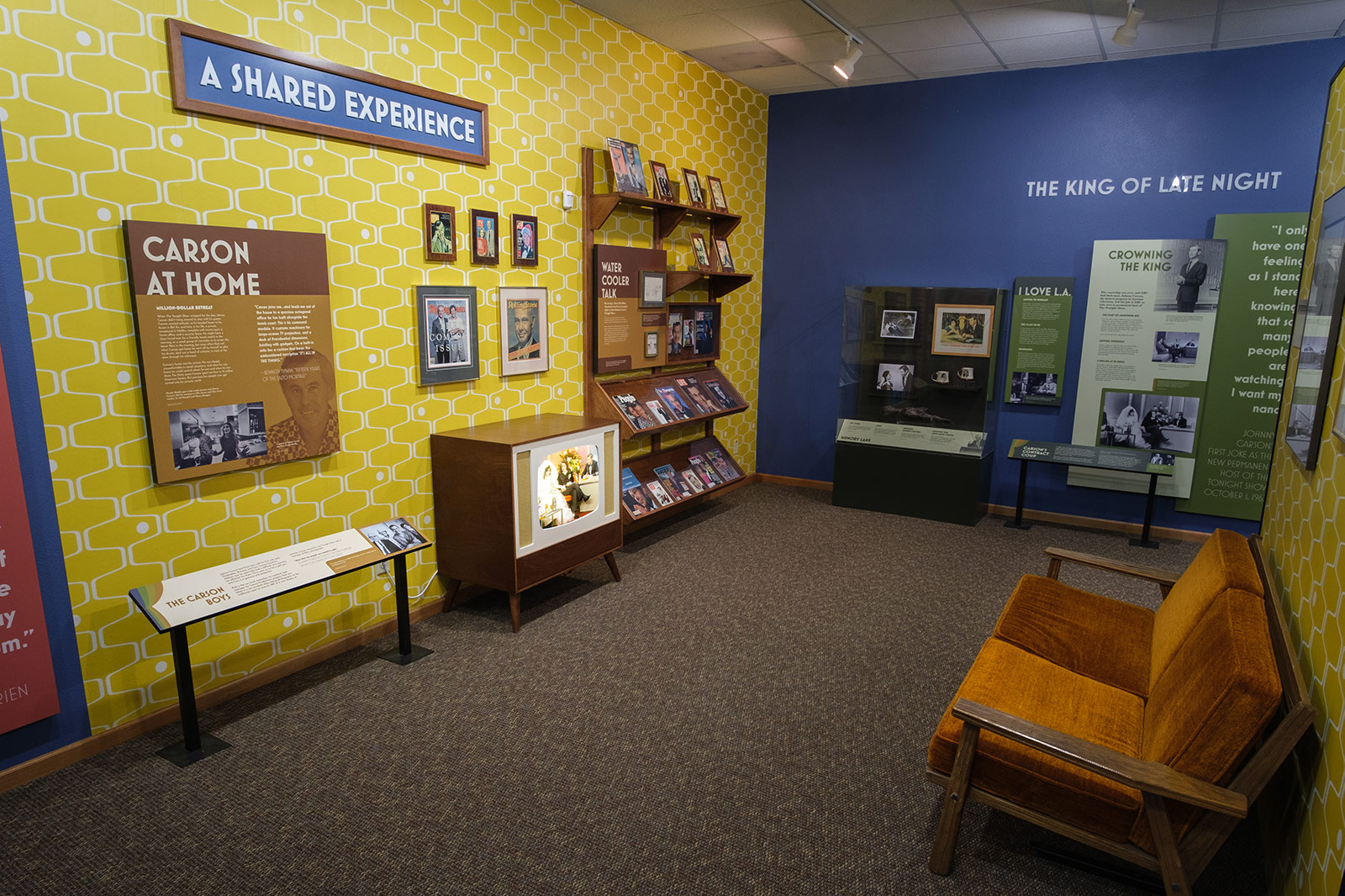
A talk-show stage with the cue cards in the rail, a Paris café you can walk into, a mountain road that climbs through the gallery, a living room from the 1960s. Sometimes the interactive is the room. The visitor's part is to stand in it, take the stage, and take the picture.
What it takes: scenic carpentry and paint that read as real from three feet away and survive a school group from three inches. Anything a visitor stands on gets built like a floor, not a set.
Where it shines: the entrance. A space that puts visitors inside the story before they've read a word does more than any panel can.

Which one?
A screen earns its place when the story is longer than the wall. A flip door earns its place when a fact would be better as a guess. A tactile piece earns its place when the real thing is behind glass. A play structure earns its place when the visitors are four. A room earns its place at the entrance.
Most exhibits we build use two or three of these kinds, not one, and the low-tech ones carry more of the load than clients expect. The one rule we hold to: nothing goes in that the museum can't keep running with the staff and budget it has.
It starts with an idea, and it can come from anywhere. For how that idea becomes a built exhibit, see our process.