Case Study · Load Testing
Our pedestals can hold a ton. Literally.
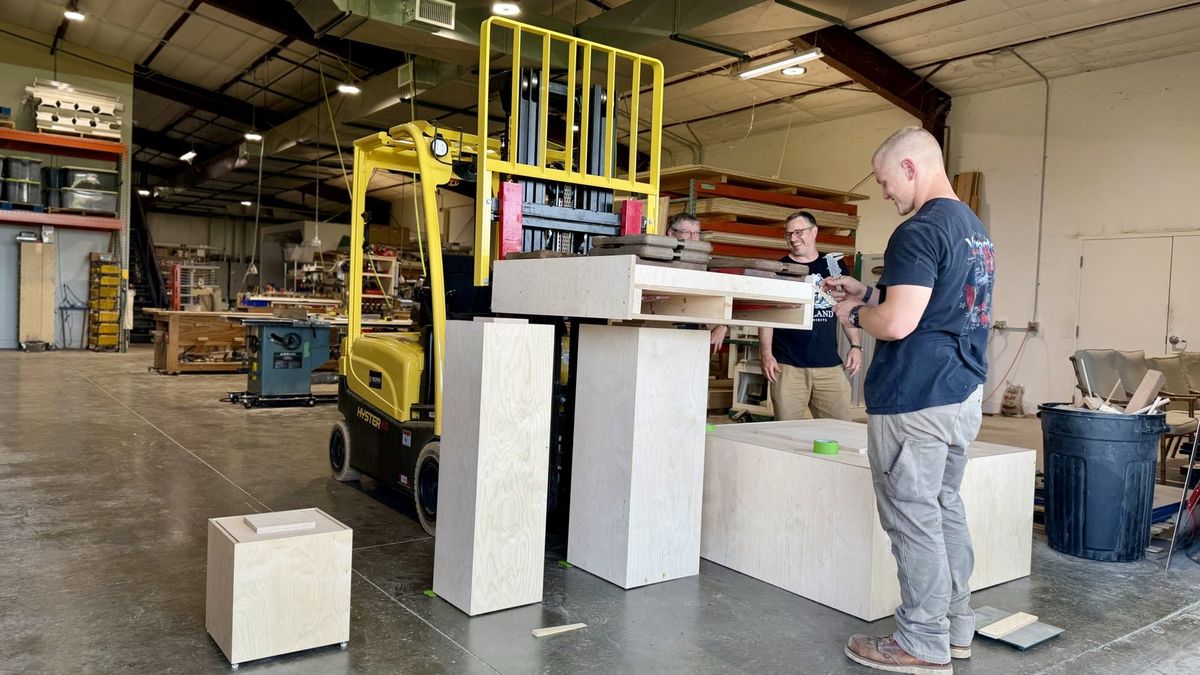
We stacked more than 2,000 lbs on a standard Upland pedestal. Nothing broke. Then we published a rating a fraction of that. Here's why.
- Applied
- 2,000+
- pounds
- Failures
- 0
- nothing broke
- Margin
- 2×
- in every rating
It ran out of floor before it ran out of strength.
We kept adding weight, expecting something to give. What finally stopped the test wasn't a crack — it was geometry. The lower frame flexed so far that the pedestal settled onto the shop floor. And the weight stayed up there.
We have never taken an Upland pedestal to catastrophic failure. We just run out of room to keep pushing.
So we don't rate to failure. We rate to flat.
A pedestal that holds the weight but visibly sags has already failed at its real job. Two checks decide the rating, and the lower one wins.
The lower frame & feet
≈ 780 lbs ÷ 2Load-tested in the shop until the frame measurably gives. We halve that, subtract the pedestal's own weight, and publish what's left.
The top surface
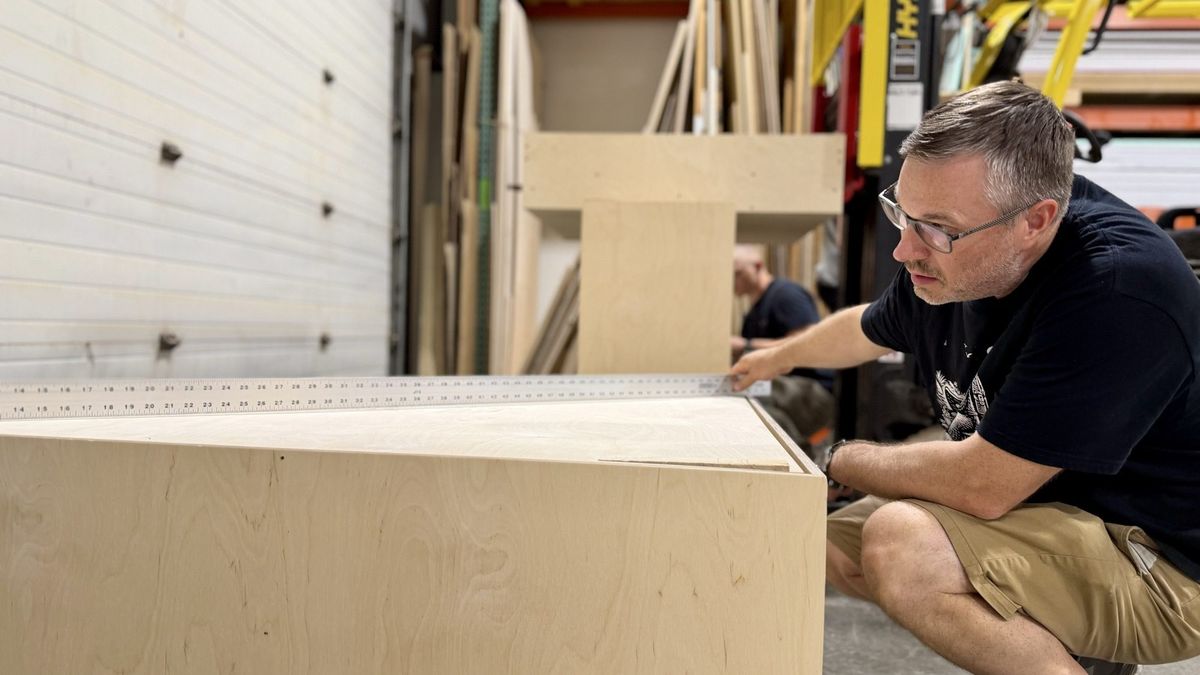
span ÷ 360Wide tops bow under a centered load. We cap sag at the same limit building codes hold a finished floor to — about 0.07″ across a 24″ top — so displays read flat and vitrines sit true.
What that gets you
| Size | Standard | Heavy-duty |
|---|---|---|
| 12″ × 12″ × 44″ | 361 lbs | 722 lbs |
| 24″ × 24″ × 36″ | 338 lbs | 676 lbs |
| 45″ × 45″ × 45″ | 262 lbs | 523 lbs |
Ratings include the safety margin and assume a centered object. Every size is rated in the builder.
Need more? We'll build it.
Both limits are engineering problems with straightforward answers. Our heavy-duty build upgrades the internal frame, feet, and top supports — the flex goes away and the rating doubles. It's a checkbox in the builder, not a special project.
Heavier than that? Tell us the number. We've never been the limiting factor.
Fine print +
Ratings are practical estimates from our own shop testing and panel calculations, not certified engineering values. They assume a centered object bearing across roughly the middle half of the top. Objects that concentrate their weight on small, hard feet can exceed a panel's local capacity well before these numbers — get in touch before ordering if that describes your artifact. The full method and constants are published in the pedestal builder.